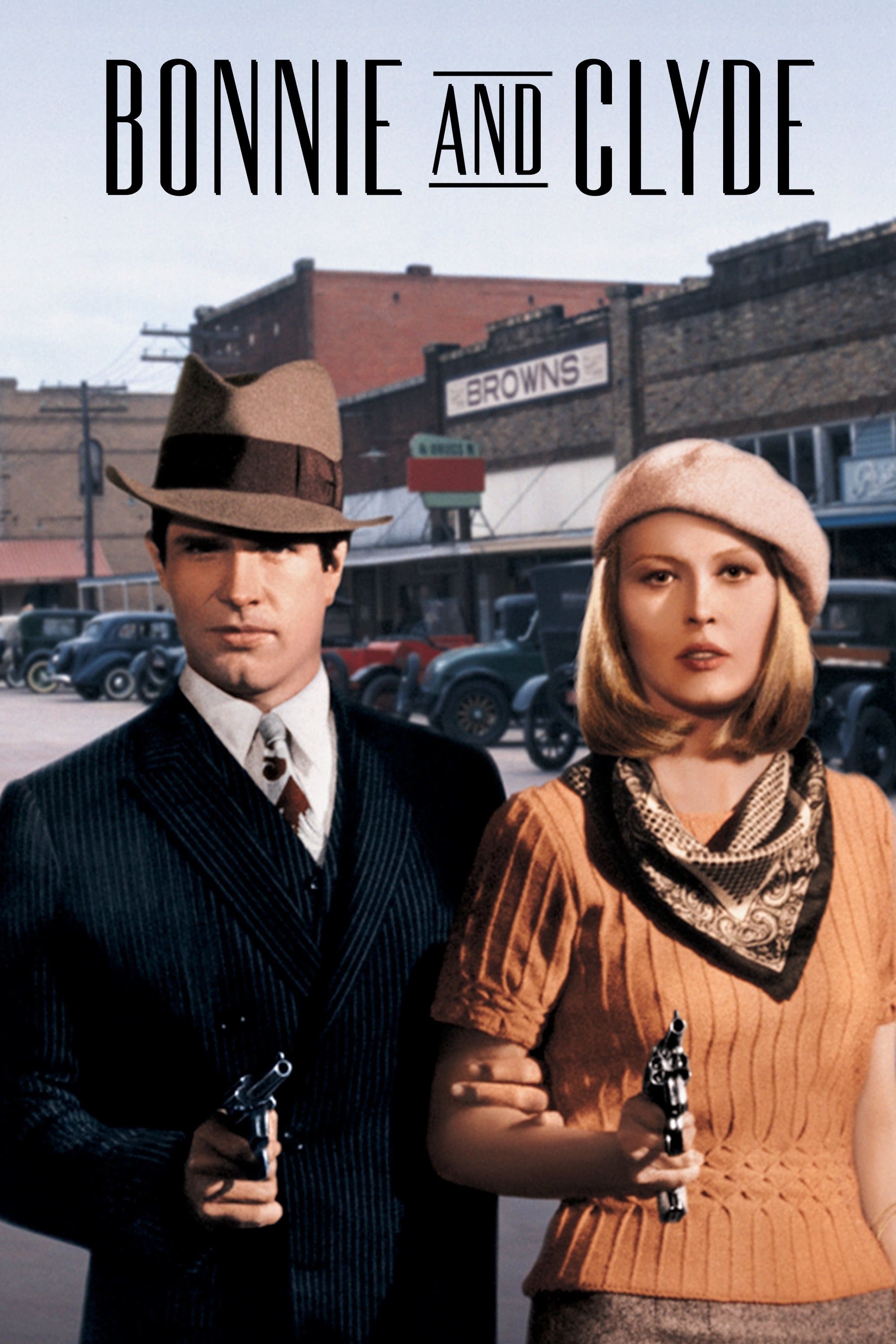
Bonnie and Clyde
1967 · Directed by Arthur Penn
- crime
- drama
The story
In the 1930s, bored waitress Bonnie Parker falls in love with an ex-con named Clyde Barrow, and together they start a violent crime spree throughout the country, stealing cars and robbing banks.
What it’s like
Sun-bleached Depression-era dust and sepia-warm daylight, shot with a restless handheld camera that lurches in close and then snaps to quick, jittery cuts, with bright flashes of gunfire breaking up the dusty plains. Arthur Penn's 1967 film carries the grainy, faded look of its period: rural Texas and Oklahoma roads, diners, and parked getaway cars rendered in washed-out earth tones, with a banjo-and-harmonica bluegrass score that turns playful and then suddenly tense. The mood is giddy and romantic at first, a crackling, flirtatious charm between two restless people, then slides into a long, sour unease as the consequences pile up. Pacing is uneven by design, with lazy comic stretches broken by abrupt, bloody shootouts that land hard, including brief but graphic gunfire and deaths. Its intensity is high: frequent violence, some blood, and an emotional bleakness that builds toward a brutal finale. It suits a late-night watch rather than a relaxed evening, and it is for viewers who want a stylish, morally uneasy crime drama about doomed romance and the cost of glamorising outlaws.