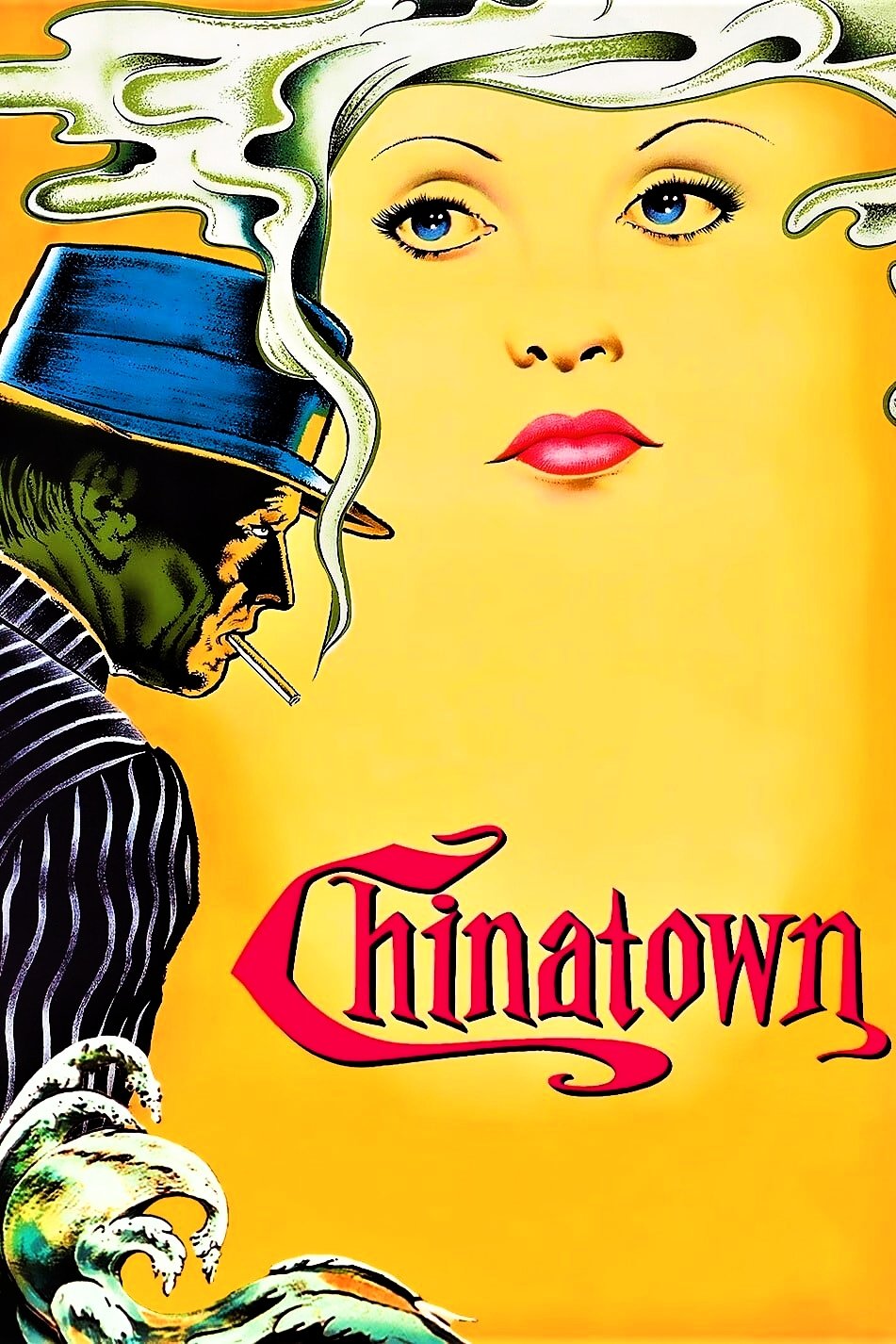
Chinatown
1974 · Directed by Roman Polanski
Original language: English
- crime
- mystery
- thriller
The story
Private eye Jake Gittes lives off of the murky moral climate of sunbaked, pre-World War II Southern California. Hired by a beautiful socialite to investigate her husband's extra-marital affair, Gittes is swept into a maelstrom of double dealings and deadly deceits, uncovering a web of personal and political scandals that come crashing together.
What it’s like
Sun-bleached and humid, with hard Los Angeles daylight pouring through venetian blinds and across dusty orchards, dry hills and rippling water, the film keeps its palette warm ochre and dun, lit by harsh afternoon sun that casts sharp shadows and then shifts into smoky, tungsten-lamped interiors. Roman Polanski frames with a formal, deliberate eye: wide compositions hold characters at the edges of the frame, long unbroken takes let silences stretch, and the camera rarely hurries. Jerry Goldsmith's score is restrained, with brassy, unsettling accents that surface only at key moments, and the rest is ambient street noise, creaking wood, and the hush of a dry, dangerous city. The vibe is cynical, weary, and quietly corrosive, with a noir glamour that curdles into dread. Pacing is measured, building toward a sudden, shocking climax, and the emotional register stays chilly even as its detective, a wisecracking, self-assured man, gradually learns how little he understands. Intensity is significant: a brutal fistfight and a few sharp moments of violence, a murder, and a disturbing sexual assault and abuse that is implied rather than shown, with a devastating ending that lands hard. It suits people who want grown-up noir, a slow-burn mystery, or a late-night watch with no comfort in it, and it is not for those seeking anything gentle.
More films like Chinatown
Closest in mood, pacing and theme. Tell us why you loved Chinatownand we’ll explain which ones fit you.