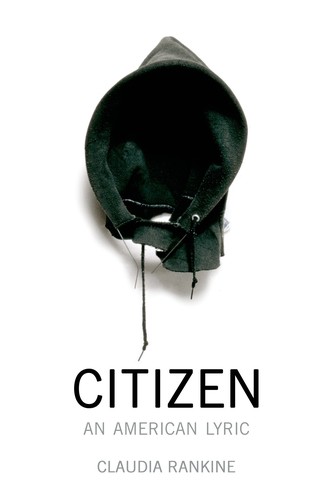
Citizen
2014
- race relations
- poetry
- essays
- racism
- american essays
- american poetry
- african american authors
- literature
- amerikanisches englisch
- fiction
The story
You take in things you don't want all the time. The second you hear or see some ordinary movement, all its intended targets, all the meanings behind the retreating sounds, as far as you are able to see, come into focus. Hold up, did you just hear, did you just say, did you just see, did you just do that? Then the voice in your head silently tells you to take your foot off your throat because just getting along shouldn't be an ambition. --from back cover "Claudia Rankine's bold new book recounts mounting racial aggressions in ongoing encounters in twenty-first-century daily life and in the media. Some of these encounters are slights, seeming slips of the tongue, and some are intentional offensives in the classroom, at the supermarket, at home, on the tennis court with Serena Williams and the soccer field with Zinedine Zidane, online, on TV -- everywhere, all the time. The accumulative stresses come to bear on a person's ability to speak, perform, and stay alive. Our addressability is tied to the state of our belonging, Rankine argues, as are our assumptions and expectations of citizenship. In essay, image, and poetry, Citizen is a powerful testament to the individual and collective effects of racism in our contemporary, often named 'post-race' society." -- from publisher's description.
What it’s like
Sparse, white-margined pages where a single line of prose or a fragment of verse sits alone, interrupted by stark photographs, blurred screenshots of tennis courts and news footage, and fields of pale negative space that make the reader slow down. The voice is intimate and second-person, close and precise, shifting between clipped sentences and long, unspooling paragraphs that circle the same wound until it becomes a kind of weather. The mood is tense and watchful, a low hum of unease that rarely breaks into outright shouting, with the quiet pressure of microaggressions building page by page. Its emotional register is controlled rather than cathartic: exhaustion, anger held under the breath, grief that accumulates rather than erupts. Intensity is high in psychological terms (humiliation, fear, the daily grind of being watched) with almost no graphic violence, though it does reference real incidents of racist cruelty and death. Best read in a single unhurried sitting, on a quiet evening, or across several days with pauses between sections. It suits readers who want poetry and essay that confront race in contemporary America with unflinching clarity, and who can sit with discomfort without needing resolution.
More books like Citizen
Closest in mood, pacing and theme. Tell us why you loved Citizenand we’ll explain which ones fit you.