Death's End (The Three-Body Problem Series Book 3)
2010
- fiction
- science fiction
- fiction, science fiction, general
- human-alien encounters
- imaginary wars and battles
- fiction, science fiction, action & adventure
- chinese science fiction
- survival
- extraterrestrial beings
- hard science fiction
The story
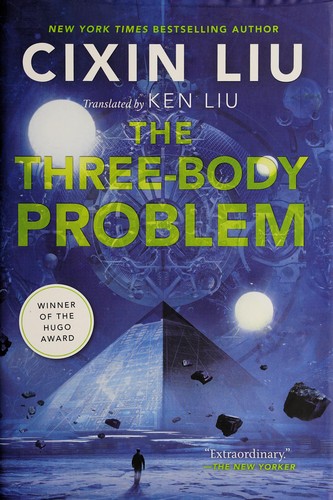
Soon to be a Netflix Original Series! “The War of the Worlds for the 21st century… packed with a sense of wonder.” – Wall Street Journal The New York Times bestselling conclusion to a tour de force near-future adventure trilogy from China's bestselling and beloved science fiction writer. With The Three-Body Problem, English-speaking readers got their first chance to read China's most beloved science fiction author, Cixin Liu. The Three-Body Problem was released to great acclaim including coverage in The New York Times and The Wall Street Journal and reading list picks by Barack Obama and Mark Zuckerberg. It was also won the Hugo and Nebula Awards, making it the first translated novel to win a major SF award. Now this epic trilogy concludes with Death's End. Half a century after the Doomsday Battle, the uneasy balance of Dark Forest Deterrence keeps the Trisolaran invaders at bay. Earth enjoys unprecedented prosperity due to the infusion of Trisolaran knowledge. With human science advancing daily and the Trisolarans adopting Earth culture, it seems that the two civilizations will soon be able to co-exist peacefully as equals without the terrible threat of mutually assured annihilation. But the peace has also made humanity complacent. Cheng Xin, an aerospace engineer from the early twenty-first century, awakens from hibernation in this new age. She brings with her knowledge of a long-forgotten program dating from the beginning of the Trisolar Crisis, and her very presence may upset the delicate balance between two worlds. Will humanity reach for the stars or die in its cradle?
What it’s like
Cool, expansive and quietly austere, with the feel of a long cold night spent under stars: the prose is clear and deliberate, favouring vast cosmic scale, measured engineering detail and slow-building dread over lush description. Its sensory world is space-bound and sparse, with sunlit cities in an unusually calm, prosperous near future, then abrupt shifts to dark, empty interstellar void, glittering fleets, and the stark white of hibernation chambers and command rooms. The register is contemplative and awed, with bursts of tense, sweeping action when the stakes spike. Violence arrives in large, impersonal, often offstage scale: wars fought at cosmic distance, with occasional brutal moments and some deaths, but no gore or sexual content. The pacing is expansive and digressive, with long stretches of philosophical reflection and speculative science punctuated by sudden reversals. Emotionally it moves from wonder to melancholy, following a stubborn woman who carries a buried past into a world that has grown comfortable, and a humanity wrestling with whether fear or courage will decide its future. Best for readers who love hard science fiction, sweeping ideas and the sense of wonder that comes with contemplating the universe, and who are happy to sit with patient, meditative chapters between bursts of cosmic tension.
More books like Death's End (The Three-Body Problem Series Book 3)
Closest in mood, pacing and theme. Tell us why you loved Death's End (The Three-Body Problem Series Book 3)and we’ll explain which ones fit you.