Debt
2011
- money
- debt
- financial crises
- history
- financial crisis
- money, history
- pengar
- penningväsen
- finanskriser
- historia
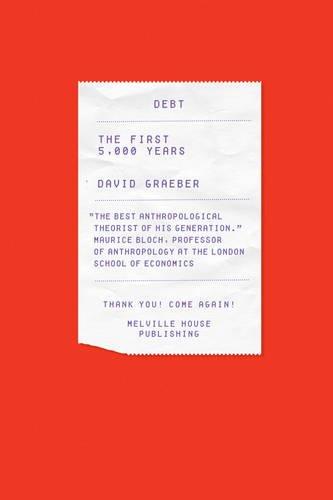
The story
The author shows that before there was money, there was debt. For 5,000 years humans have lived in societies divided into debtors and creditors. For 5,000 years debt and debt forgiveness have been at the center of political debates, laws and religions. The words “guilt,” “sin,” and “redemption” come from ancient debates about debt. These terms and the ideas of debt shape our most basic ideas of right and wrong. [source][1] [1]: http://www.amazon.com/Debt-Updated-Expanded-First-Years/dp/1612194192/ref=dp_ob_title_bk
What it’s like
Dense but conversational prose with a wry, sometimes mischievous voice, the kind of nonfiction that stops for a sharp anecdote or pointed aside before returning to its long arc. Its world is ancient and tactile: cuneiform accounts pressed into clay, Mesopotamian grain ledgers, medieval marketplaces, and the everyday bargaining of ordinary neighborhoods, all rendered through close observation rather than lush description. The tone is argumentative and amused, a little impatient with tidy economic stories, and it moves in long, looping chapters that circle back to a central claim again and again. Violence and cruelty appear as historical fact, including slavery, debt bondage, and war, described soberly with no gore or graphic detail. It suits a slow weekend with coffee, a long-haul flight where you can dip in and out, or a bookish evening when you want to be provoked rather than soothed. It is for readers who enjoy big-picture history, anthropology, and economic argument told with humor and a strong point of view, and who don't mind a book that takes its time making its case.
More books like Debt
Closest in mood, pacing and theme. Tell us why you loved Debtand we’ll explain which ones fit you.