Faust
1926 · Directed by F. W. Murnau
Original language: German
- fantasy
- drama
- horror
The story
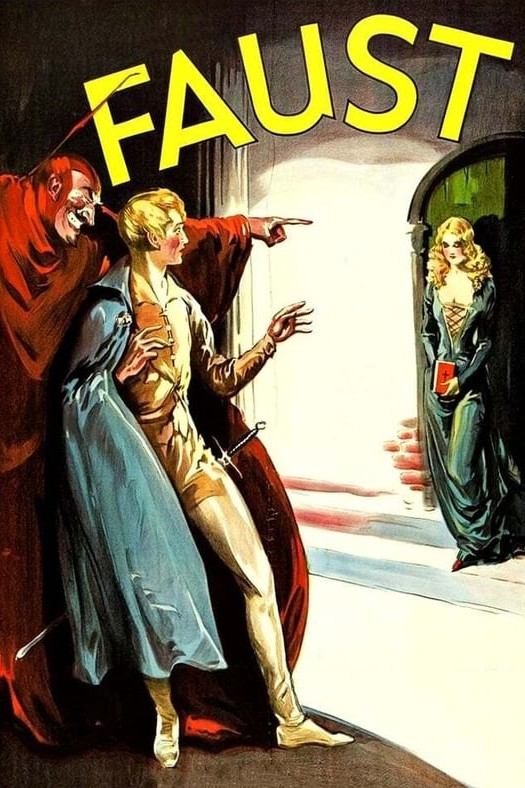
Murnau’s epic adaptation of Goethe’s tragedy stands with Fritz Lang’s Metropolis among the supreme achievements of German silent cinema. Gösta Ekman plays the alchemist who, his faith shaken in a time of plague, is offered the gift of healing and eternal youth… in exchange for his soul.
What it’s like
Silent-era chiaroscuro carved from deep shadow: vast painted sets, looming gothic arches, plague-dark streets where a single lantern or a shaft of light through a doorway does most of the work. Murnau's camera glides and tilts through huge, theatrical compositions, with rippling double exposures and dreamlike superimpositions that make the devil's arrival feel like weather moving through the frame. The image is grainy and tinted in amber, blue and sepia, with the mannered, expressive gestures of 1920s acting and intertitles that arrive like slow breaths between scenes. Without recorded sound, the atmosphere is carried by a live or newly composed score, which fills the room with swelling strings and ominous low brass. The mood is brooding and operatic, with a melancholy romanticism that turns toward dread as the bargain tightens. Intensity is moderate: a few stark images of plague victims and ghostly menace, but no gore, and the horror is atmospheric rather than graphic. It suits a slow, attentive evening or a film-history session, for viewers who enjoy old-fashioned German expressionism, gothic myth, and the weight of a tragedy told through faces and light.
More films like Faust
Closest in mood, pacing and theme. Tell us why you loved Faustand we’ll explain which ones fit you.