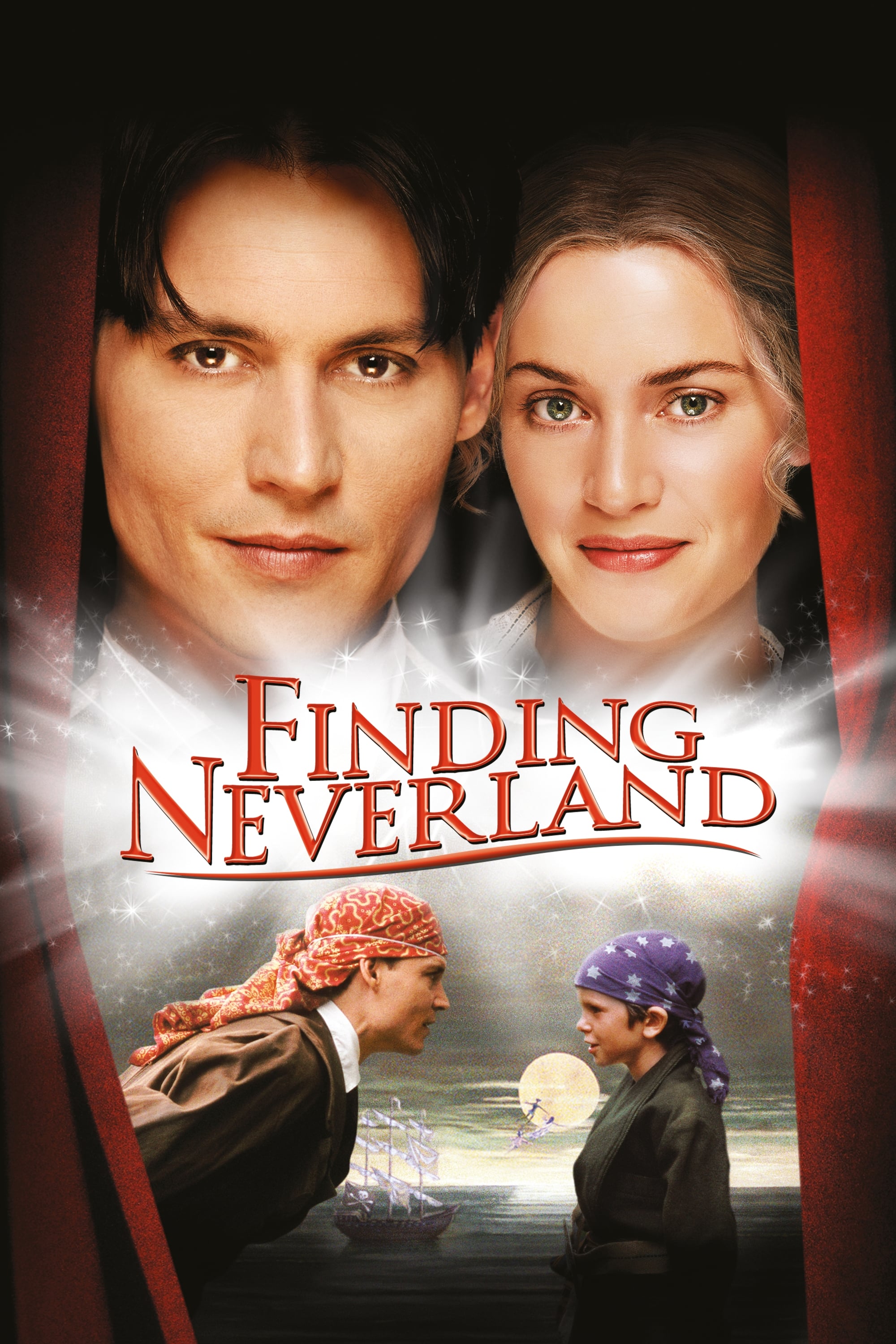
Finding Neverland
2004 · Directed by Marc Forster
Original language: English
- drama
- fantasy
The story
During a writing slump, playwright J.M. Barrie meets a widow and her four children, all young boys—who soon become an important part of Barrie’s life and the inspiration that lead him to create his masterpiece. Peter Pan.
What it’s like
Warm, soft-focus London in the early 1900s: sunlit parks with dappled light, misty gardens, and interiors lit by window glow and lamplight, with a gentle, painterly palette of greens, creams and muted russets. The camera drifts through open green spaces and often lingers on the children's faces and on Barrie's private imaginings, which briefly tip into fantasy with billowing sails, stage-like tableaux and playful staging. Scoring is a lush, melodic orchestral mix with plaintive piano, so it feels tender rather than dramatic. The vibe is wistful and bittersweet, with a comfort-film warmth: a rainy Sunday, a quiet evening, or a sit-down with someone who likes gentle, sentimental stories. The pacing is unhurried, with a lonely, guarded man slowly opening up to a family and learning to play again, while grief and illness stay in the background. Intensity is low: there is no violence or gore, and sadness and loss are handled softly and without cruelty. It suits viewers who want emotional, character-led drama with a touch of whimsy and a clear sense of heart.
More films like Finding Neverland
Closest in mood, pacing and theme. Tell us why you loved Finding Neverlandand we’ll explain which ones fit you.