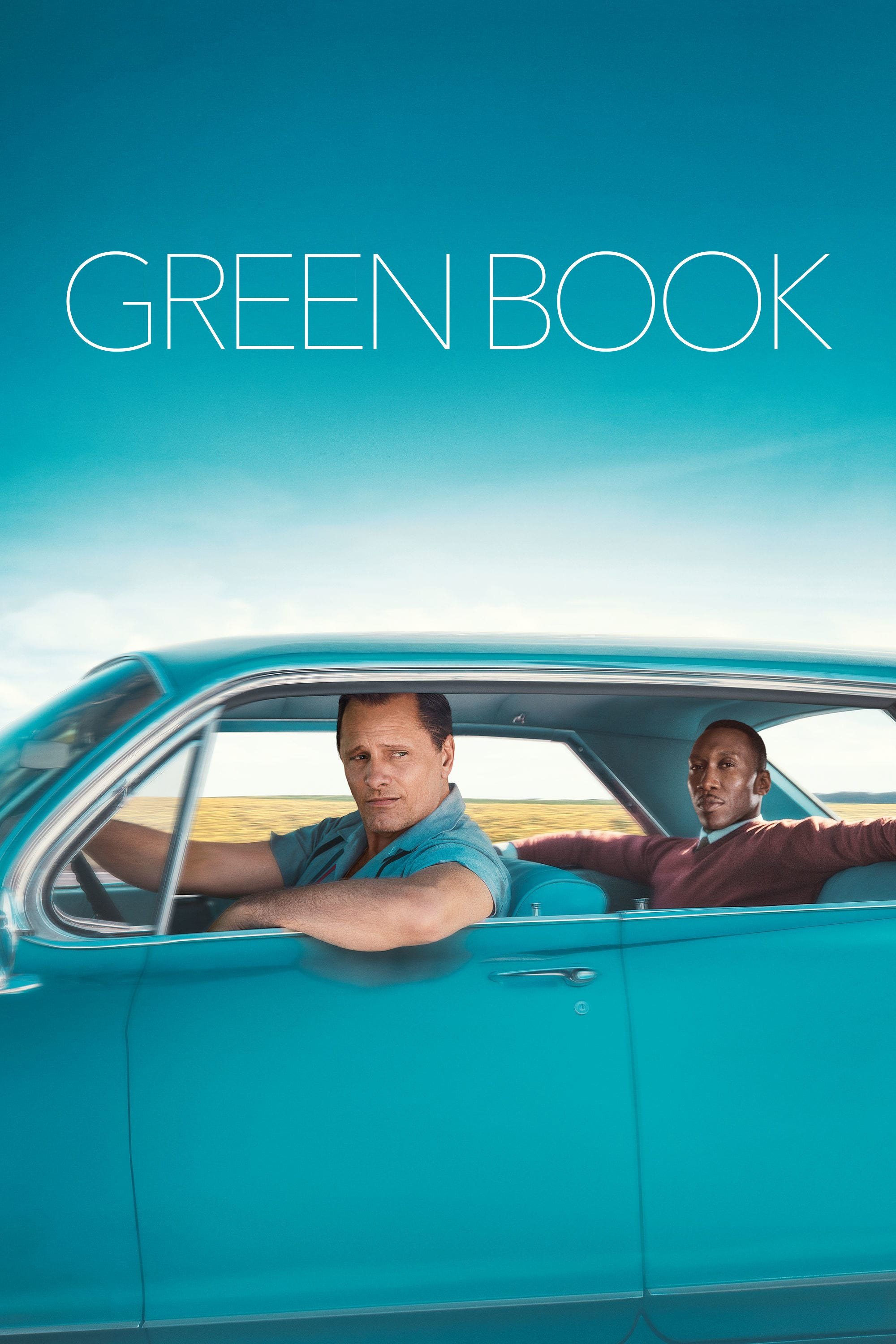
Green Book
2018 · Directed by Peter Farrelly
Original language: English
- drama
- comedy
- history
The story
Tony Lip, a bouncer in 1962, is hired to drive pianist Don Shirley on a tour through the Deep South in the days when African Americans, forced to find alternate accommodations and services due to segregation laws below the Mason-Dixon Line, relied on a guide called The Negro Motorist Green Book.
What it’s like
Warm, sun-washed road-trip light: wide shots of Cadillac-dark highways under pale Southern skies, autumn-gold fields, and the close, humid interiors of roadside diners and grand concert halls, all shot in a clean, conventional classical style with plenty of two-shots over the dashboard and steady mid-range framing. The sound is a pleasant mix of period jazz, Chopin and piano recitals drifting through a car, and easy rock-and-roll on the radio, with the score often dropping out so the dialogue carries the warmth. The vibe is comfortable and bittersweet, the kind of easy watch for a lazy weekend afternoon or a long car journey, where the scenery keeps moving and the conversation keeps you company. Pacing is brisk and friendly, with comic beats of bickering and eating that give way to quieter, more tender moments. The emotional arc follows a gruff, practical man and a reserved, proud musician slowly learning each other's worlds, and the film stays in a gentle, feel-good register even when it touches on prejudice. Intensity is mild: some scenes of racist insults and harassment, a few tense confrontations, brief scuffles, and no gore; sexual content is limited to a little light innuendo and a glimpse of affection. It suits viewers who want a humane, character-driven story with humour and heart, and who don't mind a crowd-pleasing tone over gritty realism.
More films like Green Book
Closest in mood, pacing and theme. Tell us why you loved Green Bookand we’ll explain which ones fit you.