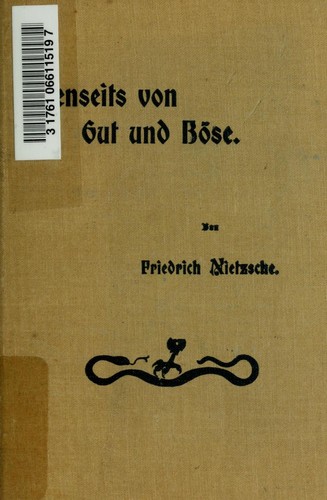
Jenseits von Gut und Böse
1885
- ethics
- philosophy
- translations into english
- good and evil.
- german philosophy
- asceticism
- good and evil
- nonfiction
- open_syllabus_project
- continental european drama (dramatic works by one author)
The story
Since the French Revolution the influence of woman in Europe has DECLINED in proportion as she has increased her rights and claims; and the "emancipation of woman," insofar as it is desired and demanded by women themselves (and not only by masculine shallow-pates), thus proves to be a remarkable symptom of the increased weakening and deadening of the most womanly instincts.
What it’s like
Short numbered sections read like fragments from a notebook, each a sharp, self-contained jab, so the book can be opened and closed in small bites. The prose is aphoristic and theatrical: sentences turn on a dime, mock their own certainty, and land on a pun or barb just as the reader settles in. The atmosphere is that of a lamplit study, cool and dry, with aphorisms that feel like cold water on the face rather than soft reflection. The register is cerebral, combative and often wickedly funny, and it rewards slow rereading more than linear progress. Its essays on morality, religion, national character and the sexes are provocative to the point of offence, with openly contemptuous passages about women, Christians, democrats and "good men" that many readers will find dated or hard to sit through. There is no violence, gore or sexual description; the cruelty is rhetorical, aimed at ideas and social types. It suits a rainy weekend with a notebook, a long train journey read in short stretches, or a late-night argument with oneself. It is for readers who want philosophy that is sharp, unsettling and unapologetically stylish, and who can tell a provocation from a settled position.
More books like Jenseits von Gut und Böse
Closest in mood, pacing and theme. Tell us why you loved Jenseits von Gut und Böseand we’ll explain which ones fit you.