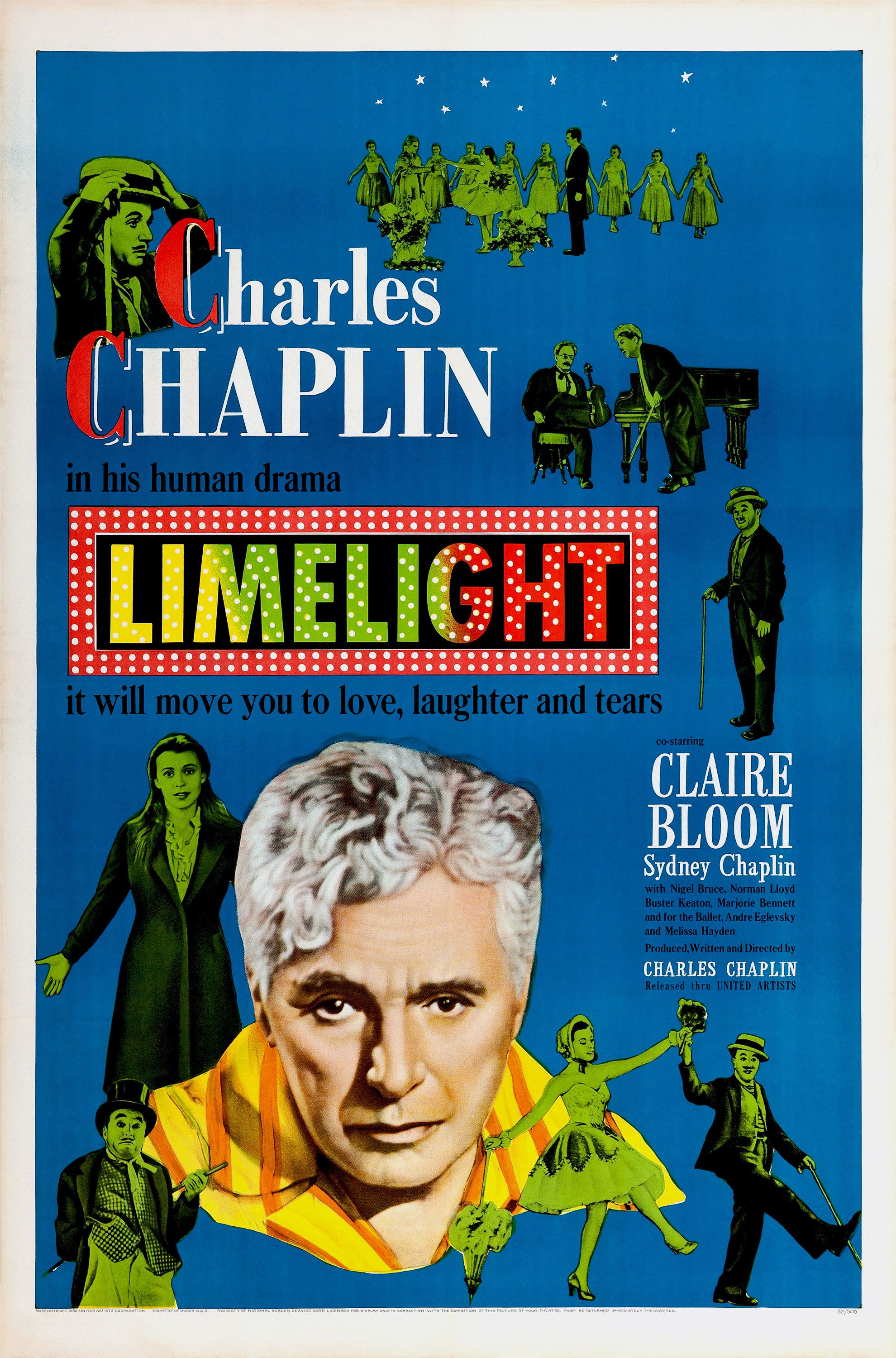
Limelight
1952 · Directed by Charlie Chaplin
Original language: English
- romance
- drama
- comedy
The story
A fading music hall comedian tries to help a despondent ballet dancer learn to walk and to again feel confident about life.
What it’s like
Soft, theatrical black and white, with stage light doing most of the work: spotlit proscenium glow, shadowy backstage corridors, and the gauzy haze of a cramped London boarding room. The camera settles into long, patient takes and held two-shots, so faces and small gestures carry the scene, while the music-hall sequences open up into bright, broad staging. Chaplin's own score, all sweeping strings and bittersweet melody, rises and falls under the dialogue, and the pauses between lines are allowed to breathe. The overall vibe is wistful and tender, a melancholy warmth with flashes of vaudeville slapstick and a long, aching final stretch. Its emotional register is sentimental but earned: an aging clown and a young dancer who has lost the will to move each help the other find a reason to keep going. The intensity is gentle, with no violence or gore, only illness, despair and a few tearful moments. It suits a quiet evening, a rainy afternoon, or anyone who loves old-Hollywood sincerity and stage-world romance, especially viewers who appreciate silent-era rhythms and theatrical physical comedy.
More films like Limelight
Closest in mood, pacing and theme. Tell us why you loved Limelightand we’ll explain which ones fit you.