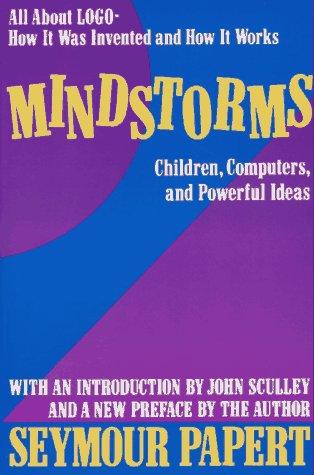
Mindstorms
1980
- computer-assisted instruction
- mathematics
- computergestuurd onderwijs
- basisonderwijs
- étude et enseignement (primaire)
- enseignement assisté par ordinateur
- mathématiques
- logo
- civilization, western, history
- mathematics--computer-assisted instruction
The story
Describes learning environments which allow children to master mathematical concepts through the use of computer assisted instruction.
What it’s like
Plain, argumentative prose with the texture of a 1980s academic-popular treatise: short declarative sentences giving way to long, digressive chapters that circle back on Piaget, Logo turtle geometry and the rhetoric of "powerful ideas." The page is mostly text with occasional diagrams and turtle-path sketches, so the visual pleasure is that of hand-drawn figures and tidy typesetting rather than anything lush. Its vibe is earnest, optimistic and faintly utopian, a warm enthusiasm for children as natural mathematicians that tips into genuine intellectual excitement when Papert describes a child programming a triangle or a bridge of ideas between geometry and everyday movement. Pacing is discursive and unhurried, more like a conversation with a thoughtful teacher than a narrative, with anecdotes from classrooms and reflections on how learning feels from the inside. Nothing here is violent, frightening or sexual; the emotional register is gentle, curious and quietly hopeful, and the only tension is the reader's own question of whether schools can change. It suits a slow weekend afternoon, a reflective evening with tea, or a rereading by teachers, parents and anyone who remembers a childhood with a first computer. It is for readers curious about how children think, about mathematics education, and about the early dreams of personal computing.
More books like Mindstorms
Closest in mood, pacing and theme. Tell us why you loved Mindstormsand we’ll explain which ones fit you.