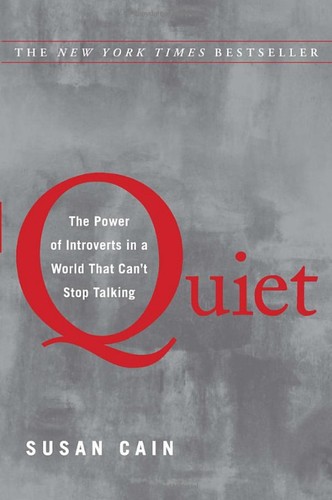
Quiet
2012
- extraversion
- introverts
- interpersonal relations
- introversion
- nyt:combined_print_nonfiction=2012-03-03
- reading level-grade 11
- reading level-grade 12
- self-actualization (psychology)
- temperament
- popular works
The story
Passionately argued, impressively researched, and filled with indelible stories of real people, Quiet shows how dramatically we undervalue introverts, and how much we lose in doing so. Taking the reader on a journey from Dale Carnegie's birthplace to Harvard Business School, from a Tony Robbins seminar to an evangelical megachurch, Susan Cain charts the rise of the Extrovert Ideal in the twentieth century and explores its far-reaching effects. She talks to Asian-American students who feel alienated from the brash, backslapping atmosphere of American schools. She questions the dominant values of American business culture, where forced collaboration can stand in the way of innovation, and where the leadership potential of introverts is often overlooked. And she draws on cutting-edge research in psychology and neuroscience to reveal the surprising differences between extroverts and introverts. Perhaps most inspiring, she introduces us to successful introverts–from a witty, high-octane public speaker who recharges in solitude after his talks, to a record-breaking salesman who quietly taps into the power of questions. Finally, she offers invaluable advice on everything from how to better negotiate differences in introvert-extrovert relationships to how to empower an introverted child to when it makes sense to be a "pretend extrovert." This extraordinary book has the power to permanently change how we see introverts and, equally important, how introverts see themselves. - Publisher.
What it’s like
Warm, curious, conversational prose that moves like a long talk with a thoughtful friend, with reporting from quiet rooms: a seminar hall, a classroom, a negotiation table, a church pew. Cain writes in clear, unhurried sentences, mixing research summaries with close portraits of people, so the pages feel reflective rather than breathless. The mood is gently affirming and a little bracing, the kind of book that makes a reader sit back and look at their own habits. It suits a slow weekend morning with coffee, a commute where you can dip in and out, or a notebook open beside you for jotting down what fits. Its intensity is low: no violence or graphic content, and any tension comes from social discomfort and workplace friction rather than danger. Pacing is steady, with chapters that each take up one idea and return to it with new examples. It is best for introverts who want to understand themselves without being told to change, for extroverts who want to understand the people they love, and for readers curious about how temperament shapes school, work, and relationships.
More books like Quiet
Closest in mood, pacing and theme. Tell us why you loved Quietand we’ll explain which ones fit you.


