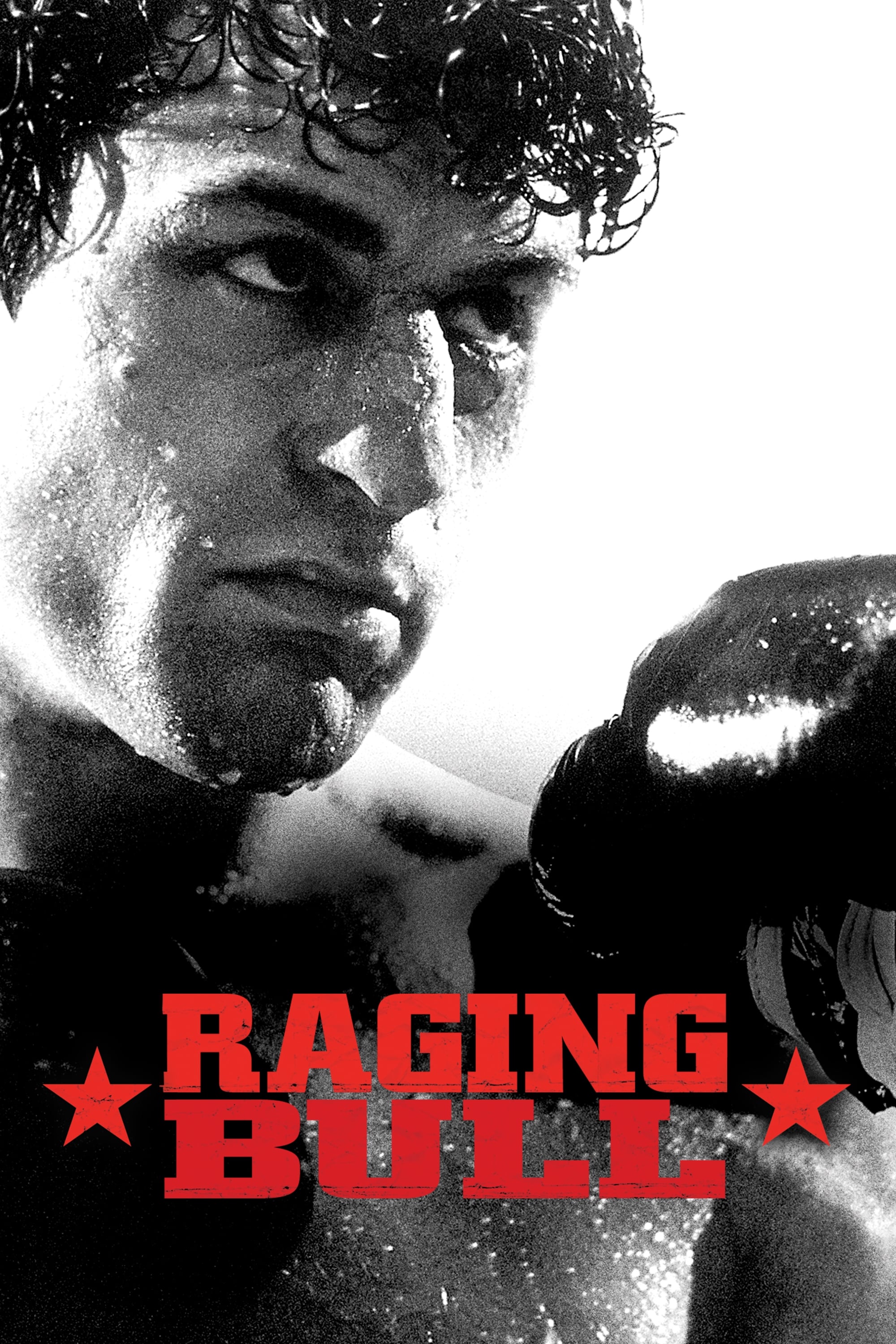
Raging Bull
1980 · Directed by Martin Scorsese
Original language: English
- drama
- history
The story
The life of boxer Jake LaMotta, whose violence and temper that led him to the top in the ring destroyed his life outside of it.
What it’s like
Stark black-and-white photography with high contrast, the ring lit by hard overhead spotlights so the sweat and blood read as glossy against deep shadow, and the rest of the frame sunk in smoky, sepia-tinged dimness: dingy Bronx apartments, steamy nightclubs, a Miami hotel lounge. Scorsese favours fluid handheld tracking through the fights, with bursts of slow motion and flash-frame cuts that make each blow land like a percussive hit, and the sound design is raw, with muffled crowd roar, thudding gloves and the wet crack of impact. Between bouts the film slows to long, claustrophobic two-shots and prowling close-ups in cramped rooms, where a bitter, restless mood settles in. The vibe is jealous, corrosive and tense, a slow-burning dread rather than a tidy story, with the violence split between brutal, sudden boxing and the quieter cruelty of domestic rage. This is intense: the fights are bloody and visceral, there is repeated domestic violence and emotional cruelty, and some sexual content and strong language. It suits viewers who want a serious, unflinching character study of self-destruction, shot with real craft, and it is not gentle or comforting.
More films like Raging Bull
Closest in mood, pacing and theme. Tell us why you loved Raging Bulland we’ll explain which ones fit you.