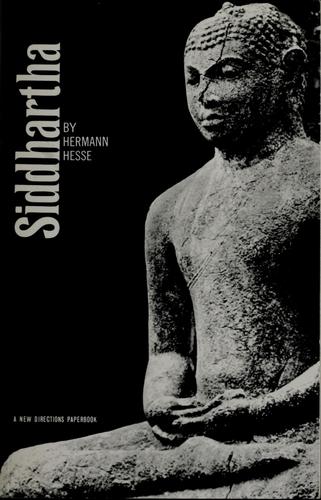
Siddhartha
1922
- alegorías
- buddha (the concept)
- buddha and buddhism
- buddhism
- buddhist philosophy
- budismo
- chrestomathies and readers
- classic literature
- enlightenment (buddhism)
- ficción
The story
Hermann Hesse wrote Siddhartha after he traveled to India in the 1910s. It tells the story of a young boy who travels the country in a quest for spiritual enlightenment in the time of Guatama Buddha. It is a compact, lyrical work, which reads like an allegory about the finding of wisdom.
What it’s like
Spare, rhythmic prose that moves like a chant, with repeated phrases and long, unhurried sentences that circle back on themselves. The sensory world is mostly river and forest: water catching light, dust on country roads, the sound of a ferry pole and the murmur of current, the hush of a shaded grove. Its mood is contemplative and quietly melancholy, with a reflective calm that suits a slow Sunday, a late evening alone, or a long train journey where you can read a few pages and look up at the landscape. Pacing is deliberate, with short chapters that feel more like parables than scenes, and its emotional register stays inward, following a restless seeker who gradually learns to let go of certainty. Intensity is very low: no violence and no gore, only a brief, non-explicit sensuality and some sadness about lost years. For readers who want a gentle, meditative book about searching for meaning, and who enjoy a classic that reads like a long, lucid poem, this is a calm and deeply reflective choice.
More books like Siddhartha
Closest in mood, pacing and theme. Tell us why you loved Siddharthaand we’ll explain which ones fit you.