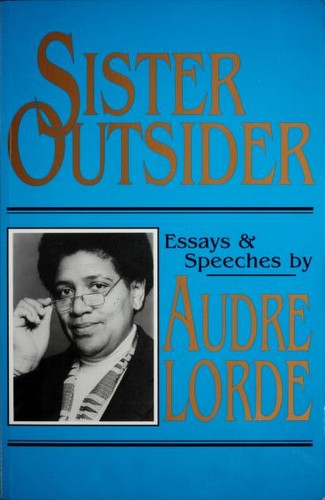
Sister Outsider
1984
- lesbianism
- feminism
- poetry
- african american women
- afro-american women
- american essays
- racism
- power (philosophy)
- afro-amerikanska kvinnor
- gender identity
The story
A collection of fifteen essays written between 1976 and 1984 gives clear voice to Audre Lorde's literary and philosophical personae. These essays explore and illuminate the roots of Lorde's intellectual development and her deep-seated and longstanding concerns about ways of increasing empowerment among minority women writers and the absolute necessity to explicate the concept of difference—difference according to sex, race, and economic status. The title Sister Outsider finds its source in her poetry collection The Black Unicorn (1978). These poems and the essays in Sister Outsider stress Lorde's oft-stated theme of continuity, particularly of the geographical and intellectual link between Dahomey, Africa, and her emerging self.
What it’s like
Dense, declarative sentences that turn sharply personal and then back into argument, with the cadence of a voice speaking directly to you across a kitchen table. The essays move between autobiographical memory, close reading, and blunt political address, so a reader gets a childhood anecdote, then a pointed challenge to a feminist conference, then a lyrical passage about the body and the erotic, often within a few pages. The prose is bold and unhedged, rich in concrete images of city streets, mothers, lovers, and classrooms, and it rewards slow reading in short sittings. Its emotional register is urgent and bracing rather than soothing: anger, tenderness, and a steady insistence on self-definition run side by side. The content is intellectually demanding and frank about racism, sexism, and homophobia, though it is not graphic; harm is discussed and analyzed rather than depicted in scenes of violence. It suits a quiet afternoon with a notebook, a train ride where a few essays fit between stops, or a reread when a reader needs a clear-eyed voice about difference, power, and survival. It is for readers who want serious thought delivered with warmth and fire, and for anyone drawn to Black feminist and queer writing that treats the personal as a site of theory.
More books like Sister Outsider
Closest in mood, pacing and theme. Tell us why you loved Sister Outsiderand we’ll explain which ones fit you.