Steins;Gate
2011
Original language: Japanese
- animation
- sci-fi & fantasy
- mystery
- comedy
The story
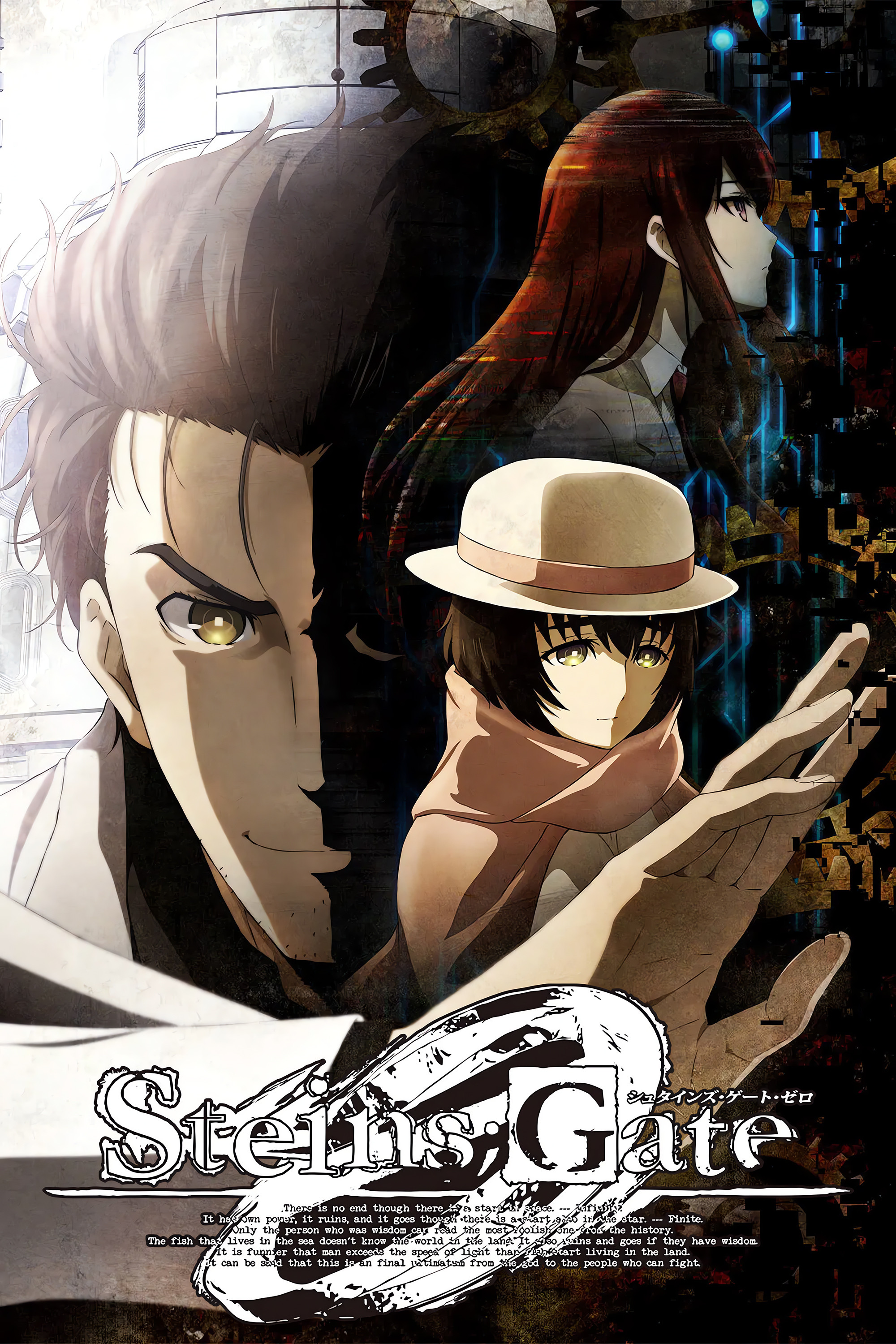
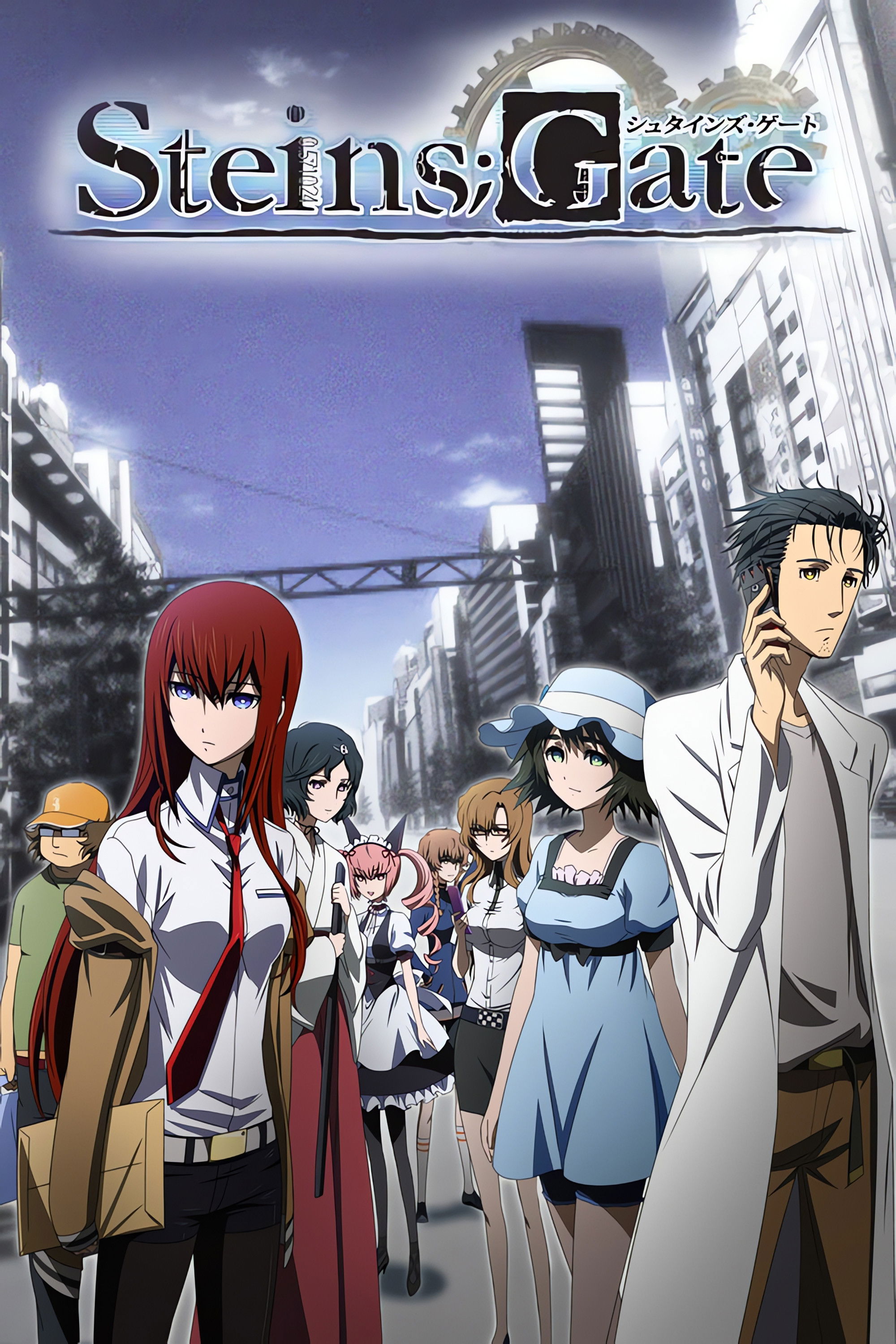
A group of friends have customized their microwave so that it can send text messages to the past. As they perform different experiments, an organization named SERN who has been doing their own research on time travel tracks them down and now the characters have to find a way to avoid being captured by them.
What it’s like
Bright, cluttered Akihabara-style interiors under fluorescent tube light give way to sudden, stark dread, with the anime's bold saturated colours and hard cel shading turning the ordinary lab-apartment into a place of quiet paranoia. Its pacing is talky and loose in the first act, full of rapid-fire banter, mock-scientific jokes and bursts of manic energy, then tightens into long, tense stretches of grey corridors, rain-streaked windows and dark rooms lit only by monitor glow. The score moves between chirpy electronic bounce and slow, mournful piano and synth pulses that swell at the worst moments. Mood-wise this is a mix of playful, nerdy warmth and creeping unease, with a melancholy undertow about grief, regret and the cost of changing the past. The emotional arcs follow a restless, self-styled genius learning to take responsibility for other people, and a group of friends whose bonds are tested by repeated loss. Violence is infrequent and mostly implied, with some brief, sharp moments of shock and a few scenes of disturbing death; there is no sexual content, and the fear is more psychological than gory. It suits a long binge across several evenings or a comfort rewatch for viewers who enjoy clever puzzles, eccentric characters and a slow-building sense of dread.
More TV shows like Steins;Gate
Closest in mood, pacing and theme. Tell us why you loved Steins;Gateand we’ll explain which ones fit you.