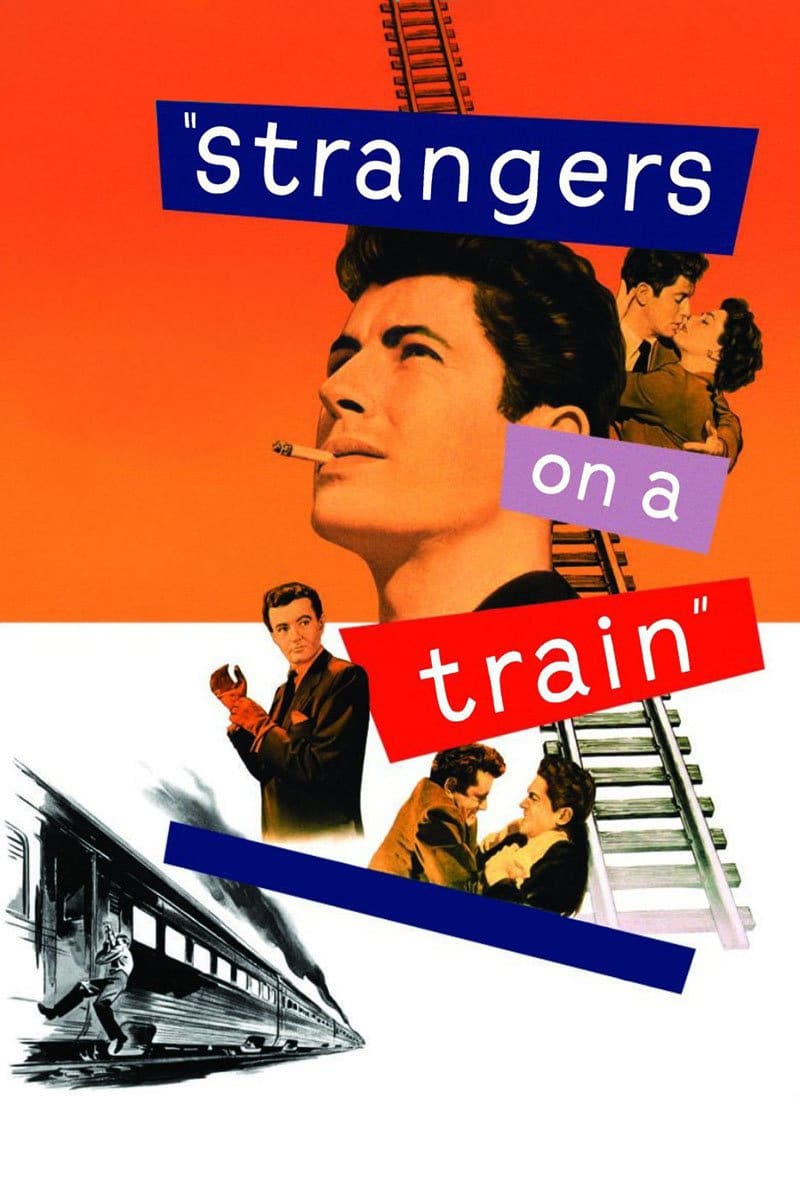
Strangers on a Train
1951 · Directed by Alfred Hitchcock
Original language: English
- crime
- thriller
- drama
The story
A charming psychopath tries to coerce a tennis star into his theory that two strangers can commit the perfect crime by exchanging murders—each killing the other’s most-hated person.
What it’s like
Crisp black-and-white studio photography with rich grey gradients, sharp shadows thrown across hotel suites and tennis clubs, and Hitchcock's signature composition of figures boxed in by doorframes, railings and the stripes of a carousel. The camera lingers on faces and reflections in polished glass, and the amusement park's whirling lights and fairground calliope give the climax a bright, nightmarish edge. Sound is mostly dialogue and a restless orchestral score that swells under suspense. The vibe is elegant unease: sophisticated, witty and slowly tightening, like a well-dressed dinner party where someone has begun to watch you too closely. Its pacing is deliberate, building through long conversational scenes until a single charged moment tips everything over. Intensity is moderate: one strangling and a drowning-adjacent struggle, shown with restraint, with tension rather than gore. The emotional register is cool and cerebral, and its people drift through moral compromise, a decent man tempted into complicity and then slowly pulled back toward his conscience. For fans of classic suspense, clever villains and mid-century style who want a thriller that rewards close attention.
More films like Strangers on a Train
Closest in mood, pacing and theme. Tell us why you loved Strangers on a Trainand we’ll explain which ones fit you.