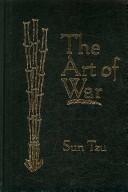
The Art of War
2025
- classics
- history
- war
- nonfiction
- philosophy
The story
'The Art of War' is an ancient Chinese military treatise written by Sun Tzu, a high-ranking military general, strategist and tactician. The text is composed of 13 chapters, each of which is devoted to one aspect of warfare. It is commonly known to be the definitive work on military strategy and tactics of its time. It has been the most famous and influential of China's Seven Military Classics, and for the last two thousand years it remained the most important military treatise in Asia, where even the common people knew it by name.Sun Tzu believed war to be an essential wrongdoing that must be got rid of whenever it can be. The war should be fought fleetingly to reduce economic decline. Sun Tzu harped on the significance of placement in military tactics. The planning to position an army must be dependent on the stipulations in the physical surroundings and the subjective thoughts of various militants in those conditions. He believed that strategy cannot be considered as planning with respect to glancing through a previously decided list. It is better represented by the fact that it needs speedy and suitable reactions to altering situations. Planning gives results in restrained surroundings. But in case of an altering environment, similar plans come in each other's ways and give rise to undesired outcomes. It has had an influence on Eastern and Western military thinking, business tactics, legal strategy and beyond.
What it’s like
Terse, classical Chinese sentences set down like ink strokes on bamboo-slip pages, each chapter a short, self-contained fragment that reads as much like aphorism as narrative: a cool, measured voice that never raises its tone. The mood is contemplative and austere, the kind of quiet a study lamp makes late at night, with the sense of a patient mind laying out terrain, weather and timing as if sketching a map by hand. In English translations the prose stays spare and pointed, with occasional moments of striking imagery about water taking no fixed shape or the wind and the forest. It suits a slow weekend morning with tea, a few pages before bed, or a reread in a long train journey where short sections can be picked up and set down. Its pacing is deliberate and cumulative; ideas return and deepen across the thirteen chapters rather than building toward any climax. Its emotional register is detached and clear-eyed, with a faint undercurrent of unease about the cost of conflict and a steady preference for avoiding it. Violence exists only as principle and rare reference, never depicted, so it is entirely gentle on the page. It is for readers who enjoy philosophy and history, who like crisp aphoristic writing, and who want calm, thoughtful reading rather than drama.
More books like The Art of War
Closest in mood, pacing and theme. Tell us why you loved The Art of Warand we’ll explain which ones fit you.