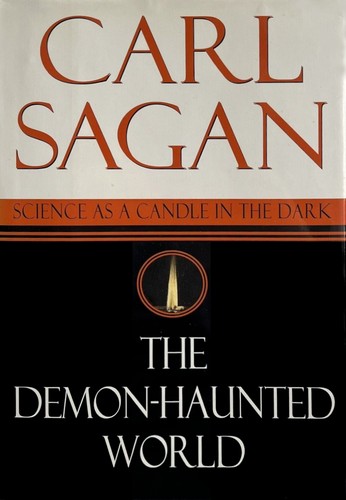
The Demon-Haunted World
1995
- long now manual for civilization
- pseudowetenschap
- science
- onwetendheid
- parapsychology
- popular works
- sociale aspecten
- irrtum
- aberglaube
- naturwissenschaftliche weltanschauung
The story
A prescient warning of a future we now inhabit, where fake news stories and Internet conspiracy theories play to a disaffected American populace “A glorious book . . . A spirited defense of science . . . From the first page to the last, this book is a manifesto for clear thought.”—Los Angeles Times How can we make intelligent decisions about our increasingly technology-driven lives if we don’t understand the difference between the myths of pseudoscience and the testable hypotheses of science? Pulitzer Prize-winning author and distinguished astronomer Carl Sagan argues that scientific thinking is critical not only to the pursuit of truth but to the very well-being of our democratic institutions. Casting a wide net through history and culture, Sagan examines and authoritatively debunks such celebrated fallacies of the past as witchcraft, faith healing, demons, and UFOs. And yet, disturbingly, in today's so-called information age, pseudoscience is burgeoning with stories of alien abduction, channeling past lives, and communal hallucinations commanding growing attention and respect. As Sagan demonstrates with lucid eloquence, the siren song of unreason is not just a cultural wrong turn but a dangerous plunge into darkness that threatens our most basic freedoms.
What it’s like
Clear, measured prose with a teacherly warmth, the voice of a patient lecturer who stops to show you the trick before explaining why it fooled people: think of a late-evening reading lamp, a notebook at your elbow, and the steady pace of someone walking you through a museum of old errors. Sagan's chapters move in a deliberate rhythm, one myth set beside a testable claim, one historical witch trial or faith-healing scam unpicked step by step, then a turn toward the present day and the glowing screens where the same habits of credulity now spread. The sensory world is mostly of libraries, candlelit courtrooms, and crowded tent revivals, rendered in plain, precise sentences rather than lush description. The emotional register is earnest and quietly urgent, more concerned than cynical, with a hopeful insistence that ordinary people can learn to ask for evidence. Intensity is low: occasional references to burnings, cruelty in historical witch hunts, and manipulative frauds are described factually, with no graphic detail. It suits a rainy Sunday, a slow commute, or a sceptical reader who enjoys being taught how to think, and it is written for curious general readers who want rigour without jargon.
More books like The Demon-Haunted World
Closest in mood, pacing and theme. Tell us why you loved The Demon-Haunted Worldand we’ll explain which ones fit you.