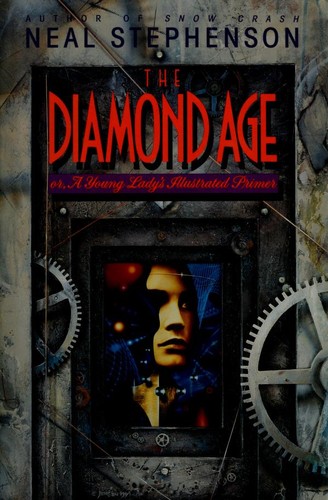
The Diamond Age
1995
- revolutions
- quests (expeditions)
- fiction
- hugo award winner
- science fiction
- award:hugo_award=1996
- young women
- nanotechnology
- award:hugo_award=novel
- fiction, science fiction, general
The story
The story of an engineer who creates a device to raise a girl capable of thinking for herself reveals what happens when a young girl of the poor underclass obtains the device.
What it’s like
Dense, busy, and knowingly maximalist on the page: Stephenson's prose moves between crisp technical exposition and sprawling street-level chatter, so the texture shifts from lab-bench precision to the noisy clutter of a near-future city of neighborhoods, phyles and tribal enclaves. The sensory world is one of brass and lacquer, gleaming atriums, smoke-stained tenements, and the glow of interactive primers that talk back to a child, all rendered with a fizzy, mischievous energy. The vibe is brisk, erudite and playful, with a current of unease running beneath the wit. Its pacing is episodic and wide-ranging, cutting between many characters and cities, and its emotional register is warm and curious, following a bright, scrappy girl and the lonely engineer who made her learn to think for herself, with the arcs tracing how each comes to understand their place in a fractured society. Intensity is moderate: there is some violence, including fights and a few sudden deaths, but it is rarely lingered on and never gory, with sexual content present but not explicit. This suits readers who want big ideas wrapped in a propulsive, witty story, for long train journeys or unhurried weekends with a notebook close by, and for those who enjoy speculative worlds that feel lived-in and argumentative.
More books like The Diamond Age
Closest in mood, pacing and theme. Tell us why you loved The Diamond Ageand we’ll explain which ones fit you.