The Longest Day
Directed by Ken Annakin, Andrew Marton
- war
- drama
- history
The story
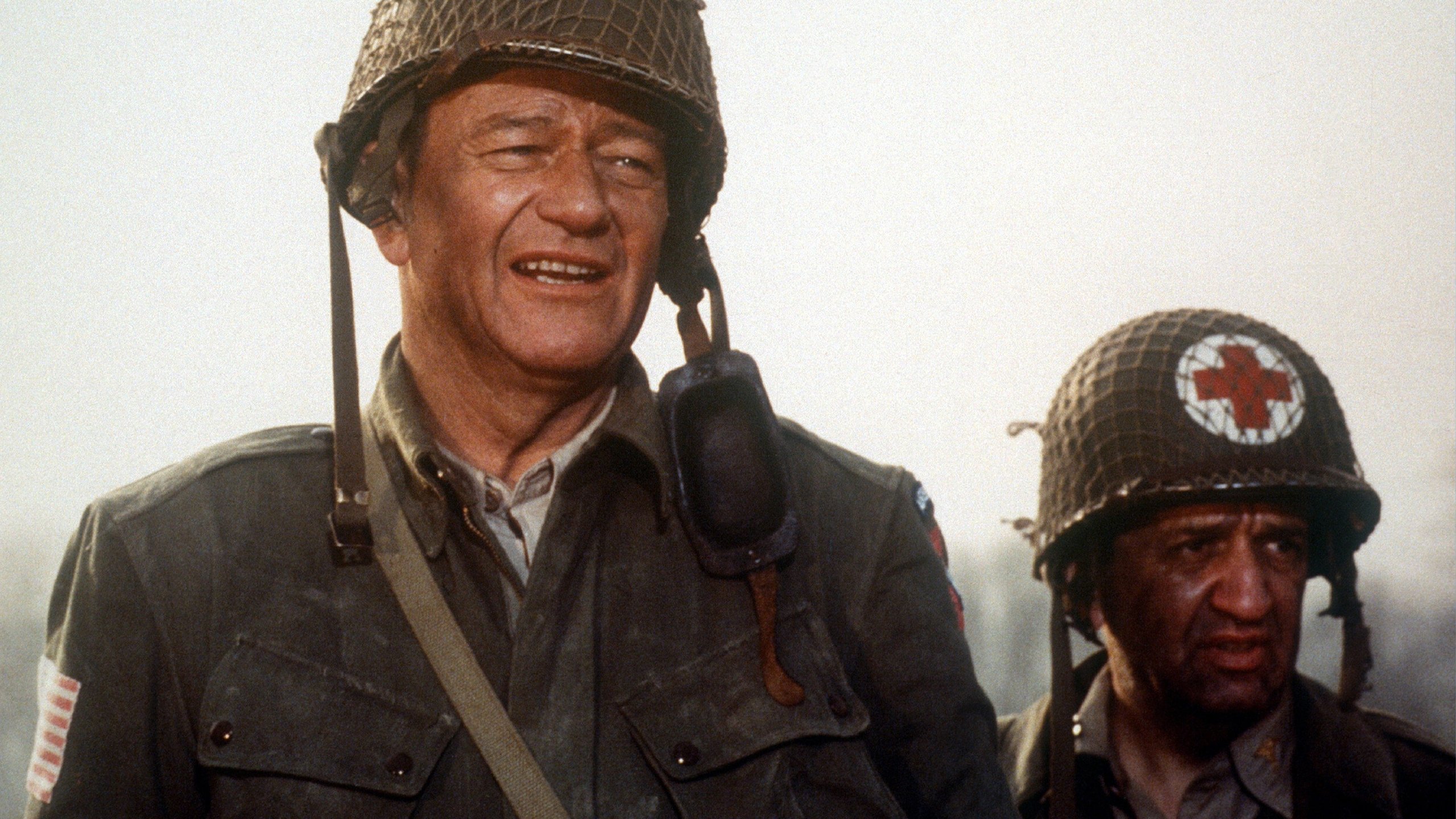
The retelling of June 6, 1944, from the perspectives of the Germans, US, British, Canadians, and the Free French. Marshall Erwin Rommel, touring the defenses being established as part of the Reich's Atlantic Wall, notes to his officers that when the Allied invasion comes they must be stopped on the beach. "For the Allies as well as the Germans, it will be the longest day"
What it’s like
Black-and-white widescreen photography gives the Normandy landings a documentary weight: wide, crowded frames of grey surf, sand and smoke, with soldiers small against enormous skies and the cool, flat light of an overcast coast. The camera mostly holds back, using long establishing shots of troops, landing craft and paratroopers drifting into dark fields, then cutting between German headquarters, Allied command and the French countryside with a steady, almost clerical patience. The score is brassy and martial in the big moments but falls silent for long stretches of waiting, so the rhythm is slow, episodic and deliberately broad. Its vibe is stately, sober and sprawling, a long-form history lesson more than a personal drama, suited to a quiet afternoon or a weekend marathon rather than late-night suspense. The violence is real but mostly staged at a distance: gunfire, explosions, and bodies on the sand, with some tense close fighting, yet no gore and little graphic detail. It is a war film for viewers who enjoy old-fashioned epics, ensemble casts and historical scale, and who find dread more comfortable than gore.
More films like The Longest Day
Closest in mood, pacing and theme. Tell us why you loved The Longest Day and we’ll explain which ones fit you.