The Name of the Wind
2007
- orphans
- american fantasy fiction
- adult books for young adults
- epic fiction
- series
- juvenile audience
- demons
- quests
- loss (psychology)
- fate and fatalism
The story
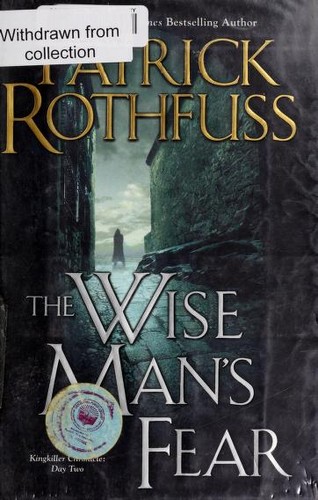
***The Name of the Wind***, also called ***The Kingkiller Chronicle: Day One***, is a heroic fantasy novel written by American author Patrick Rothfuss. It is the first book in the ongoing fantasy trilogy ***The Kingkiller Chronicle***. It was published on March 27, 2007, by DAW Books, the novel has been hailed as a masterpiece of high fantasy. The story begins the tale of Kvothe (pronounced "quothe"), a young man who becomes the most notorious magician his world has ever known. Kvothe narrates his own journey, from his childhood in a troupe of traveling players to his years as a near-feral orphan in a crime-ridden city, and his daring entrance into a prestigious and perilous school of magic. Patrick Rothfuss's debut novel has been praised for its fresh and earthy originality, transporting readers into the mind of a wizard and the world that shaped him. It explores the truth behind the legend of a hero and how one can become entangled in their own mythology. Rothfuss's powerful storytelling and robust writing have earned him comparisons to renowned fantasy authors such as [Tad Williams][1], [George R. R. Martin][2], and [Robert Jordan][3]. Followed by: [***The Wise Man's Fear***][4] ([Source: special note from the publisher][5]) [1]: https://openlibrary.org/authors/OL292141A/ [2]: https://openlibrary.org/authors/OL234664A/ [3]: https://openlibrary.org/authors/OL233594A [4]: https://openlibrary.org/works/OL8479869W [5]: https://patrickrothfuss.com/content/note.html
What it’s like
Warm, sun-dappled and sensory on the page, with the texture of lived-in taverns, woodsmoke, road dust and the cold stone of a university city after dark. Rothfuss writes in a first-person voice that is conversational, wry and bookish, a narrator telling his own story from a quiet inn with a frame of present-day melancholy running beneath the adventure. The prose lingers on food, music, weather and the small crafts of daily work, and magic is rendered as careful, tactile study rather than spectacle: names, ink, copper, the hum of a lute. The overall vibe is wistful and cozy-dark, the kind of book that suits a long rainy weekend, a late-night read by lamplight, or a slow commute where you can sink in. Pacing is leisurely, digressive and hungry for detail, building toward tense stretches of hunger, poverty and cruelty before settling back into the rhythm of school life and friendship. Intensity is moderate: some violence, a few harrowing scenes of abuse and deprivation handled with restraint, and a little sensuality, but no gore and no graphic sex. Its emotional arc follows a gifted, proud orphan learning that his talents and losses are bound up with the stories people tell about him. Written for readers who love immersive world-building, clever, self-aware narrators, and fantasy with an earthy, lived-in feel.
More books like The Name of the Wind
Closest in mood, pacing and theme. Tell us why you loved The Name of the Windand we’ll explain which ones fit you.