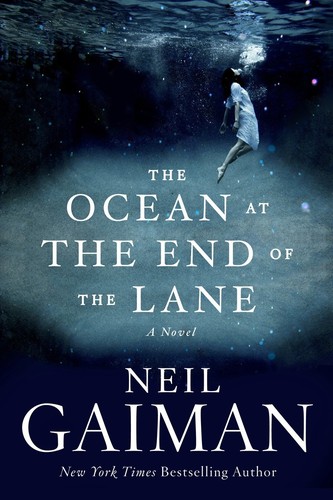
The Ocean at the End of the Lane
2013
- good and evil
- boys
- women
- magic
- memory
- survival
- fiction
- fiction, fantasy, general
- fiction, coming of age
- supervivencia
The story
A middle-aged man returns to his childhood home to attend a funeral. Although the house he lived in is long gone, he is drawn to the farm at the end of the road, where, when he was seven, he encountered a most remarkable girl, Lettie Hempstock, and her mother and grandmother. He hasn't thought of Lettie in decades, and yet as he sits by the pond (a pond that she'd claimed was an ocean) behind the ramshackle old farmhouse, the unremembered past comes flooding back. And it is a past too strange, too frightening, too dangerous to have happened to anyone, let alone a small boy. Forty years earlier, a man committed suicide in a stolen car at this farm at the end of the road. Like a fuse on a firework, his death lit a touchpaper and resonated in unimaginable ways. The darkness was unleashed, something scary and thoroughly incomprehensible to a little boy. And Lettie—magical, comforting, wise beyond her years—promised to protect him, no matter what. A groundbreaking work from a master, The Ocean at the End of the Lane is told with a rare understanding of all that makes us human, and shows the power of stories to reveal and shelter us from the darkness inside and out. It is a stirring, terrifying, and elegiac fable as delicate as a butterfly's wing and as menacing as a knife in the dark.
What it’s like
Quiet, memory-soaked and unhurried, with the hush of a rural English summer: long meadows, a green-scummed pond, a farmhouse kitchen lit by lamp and range-warmth, and the sense of a child's world sharpened to a glint. Gaiman writes in a first-person voice that drifts between an adult's wry, weary reflection and a seven-year-old's fierce literalism, so the prose has both the cadence of a bedtime story and the chill of something gone wrong just past the hedge. The mood is elegiac and wistful, with a thread of dread that tightens as the strangeness deepens, a cozy melancholy that turns watchful. Violence is largely off-page and the menace is atmospheric; there is a suicide at its root, handled with restraint, and some frightening supernatural threat, but no gore and no sexual content. Pacing is steady and reflective, moving through childhood memories with long, drifting passages that suit a slow afternoon or a late night with a lamp on. It fits readers who love fables and folklore, mythic fantasy that grows from ordinary life, and a story about a lonely boy finding courage through an unlikely friendship with a fierce, kind girl who promises to protect him.
More books like The Ocean at the End of the Lane
Closest in mood, pacing and theme. Tell us why you loved The Ocean at the End of the Laneand we’ll explain which ones fit you.