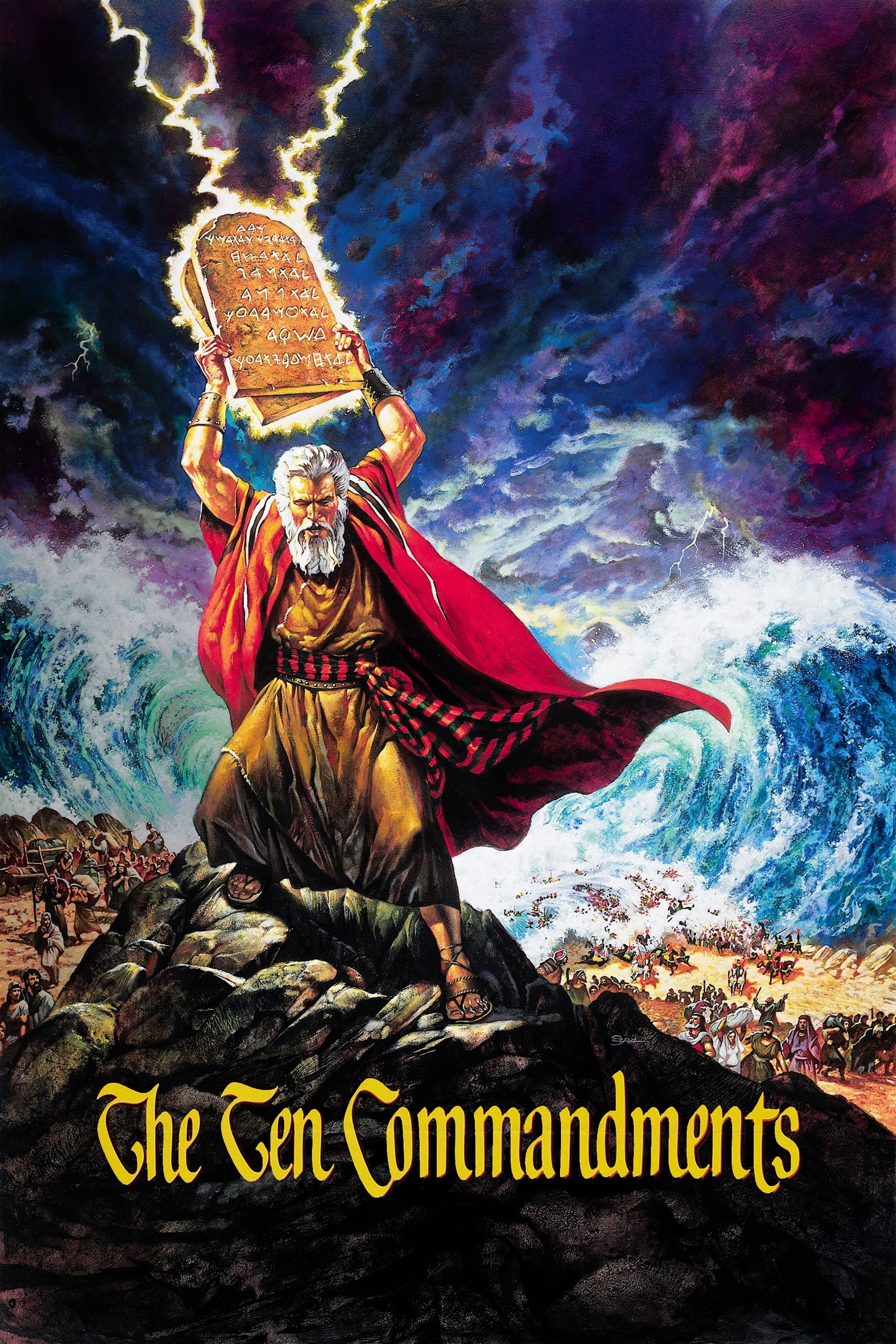
The Ten Commandments
1956 · Directed by Cecil B. DeMille
Original language: English
- drama
- history
The story
Escaping death, a Hebrew infant is raised in a royal household to become a prince. Upon discovery of his true heritage, Moses embarks on a personal quest to reclaim his destiny as the leader and liberator of the Hebrew people.
What it’s like
Sweeping VistaVision spectacle in saturated Technicolor: blazing desert sun, gold-lit Egyptian palaces, towering sets and crowds of thousands framed in wide, deliberately composed shots, with the Red Sea parting in effects work that still lands as awe. The sound is a big orchestral score by Elmer Bernstein-era grandeur, with choral swells, thundering brass and hushed moments when voices drop away entirely. Pacing is stately and long, built for a three-and-a-half-hour evening, with tableaux that linger and a slow, earnest rhythm rather than quick cuts. The mood is solemn, operatic and devotional, moving from sumptuous court intrigue and pageantry toward a stern, faith-soaked finale. Its arc follows a proud man stripped of privilege and slowly remade into a reluctant liberator, with a rival brother's bitterness and the king's stubborn pride as its emotional counterweights. Violence is present but mostly staged at a distance: a few brief lashings, a slaying, and the plague and sea sequences, with death shown in crowds and tableaux rather than gore. Sexual content is minimal, with romance kept chaste and stylized. It suits a Sunday afternoon with the blinds half-drawn, or a family evening, for viewers who want old-fashioned Hollywood epic and biblical grandeur.
More films like The Ten Commandments
Closest in mood, pacing and theme. Tell us why you loved The Ten Commandmentsand we’ll explain which ones fit you.