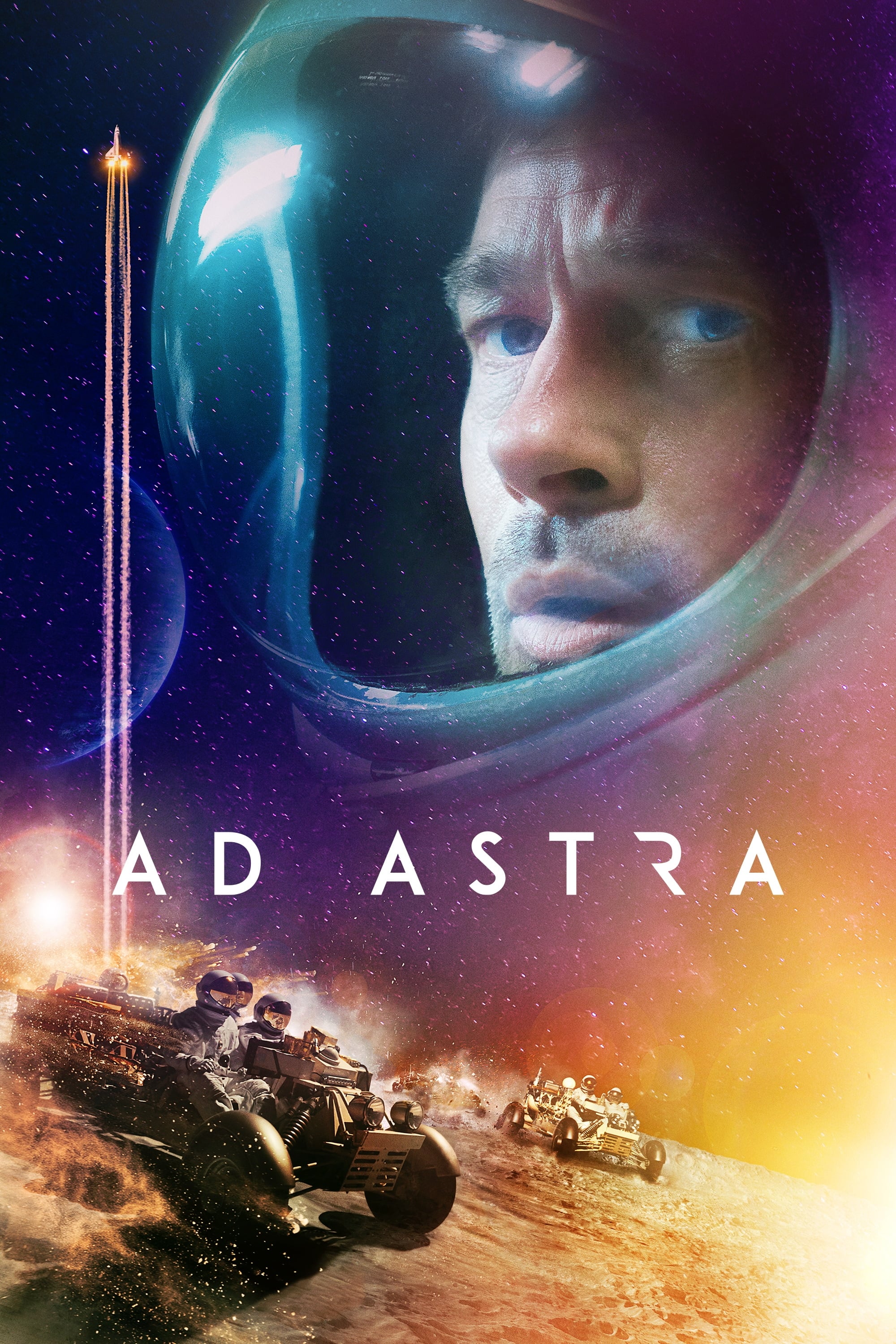
Ad Astra
2019 · Directed by James Gray
Original language: English
- science fiction
- drama
The story
The near future, a time when both hope and hardships drive humanity to look to the stars and beyond. While a mysterious phenomenon menaces to destroy life on planet Earth, astronaut Roy McBride undertakes a mission across the immensity of space and its many perils to uncover the truth about a lost expedition that decades before boldly faced emptiness and silence in search of the unknown.
What it’s like
Cool, clinical light dominates, with long, slow compositions that hold on Brad Pitt's face in close quarters and then pull back to the vast black of space, where the Earth and Moon hang like pale marbles. Sound design does much of the work: the hush of cabin air, the hum of machinery, and long stretches of near silence broken by a low, throbbing score that swells like a distant pulse. Interiors are sleek and sterile, with white corridors, glowing consoles, and the stark geometry of lunar bases and spacecraft, while the lunar surface and Martian dust bring a bleak, sun-bleached emptiness. Pacing is deliberate and meditative, favouring interior monologue and quiet watchfulness over action, though a few sudden, intense sequences puncture the calm. Violence is occasional and sharp, including a tense sequence with a rover and a brief, unsettling moment of peril in zero gravity, with little gore. The emotional register is melancholy and introspective, tracing a solitary man slowly confronting his estranged father and his own emptiness. Suited to people who want a contemplative, lonely late-night watch, and to fans of slow, atmospheric science fiction driven by character rather than spectacle.
More films like Ad Astra
Closest in mood, pacing and theme. Tell us why you loved Ad Astraand we’ll explain which ones fit you.