Amarcord
Directed by Federico Fellini
- comedy
- drama
The story
In an Italian seaside town, young Titta gets into trouble with his friends and watches various local eccentrics as they engage in often absurd behavior. Frequently clashing with his stern father and defended by his doting mother, Titta witnesses the actions of a wide range of characters, from his extended family to Fascist loyalists to sensual women, with certain moments shifting into fantastical scenarios.
What it’s like
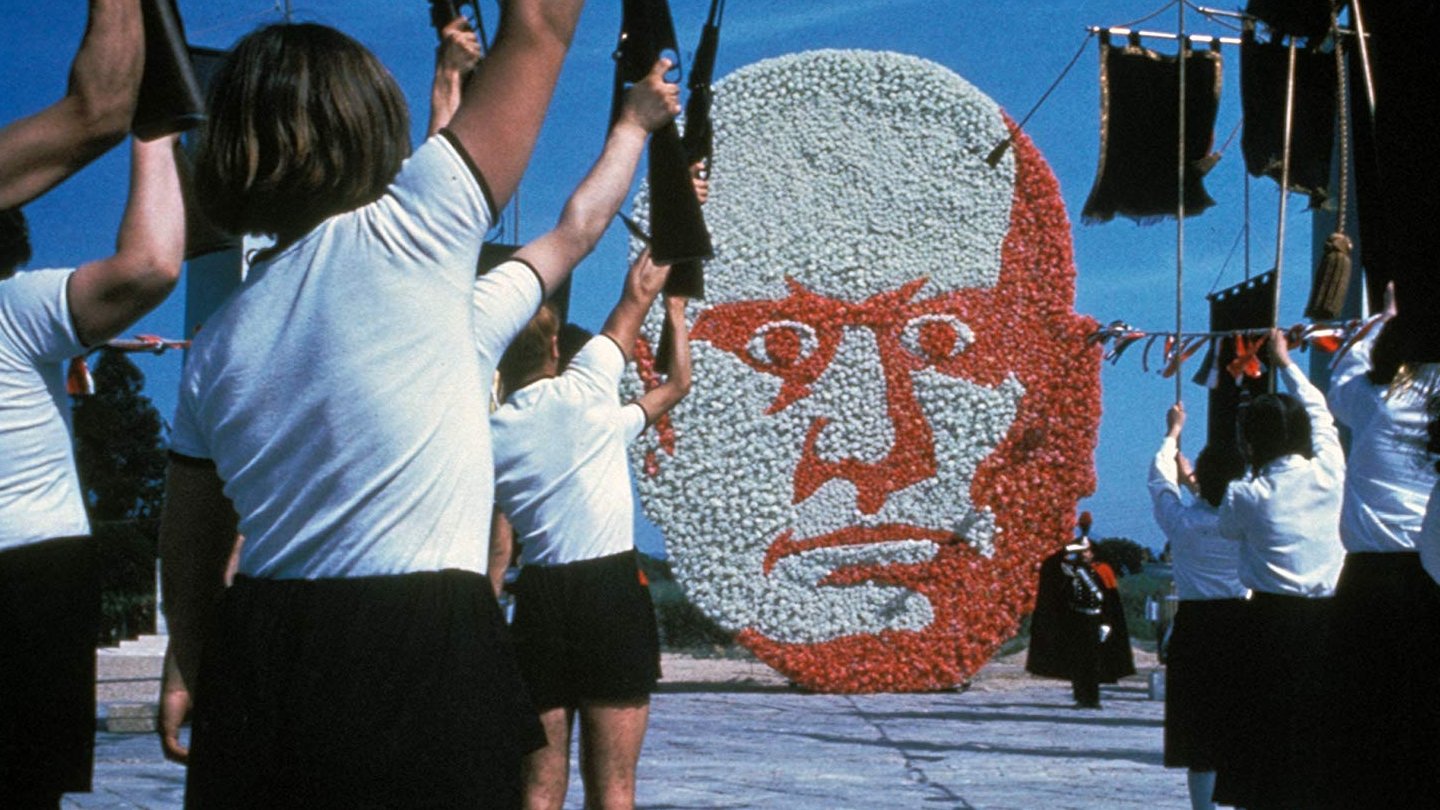
Warm, bustling and gently absurd, with the look of a half-remembered childhood: soft, slightly faded colour that leans toward ochre, peach and sea-blue, and a camera that drifts through crowded piazzas, dining tables and the hazy shoreline in long, unhurried movements. Fellini's compositions are busy but balanced, with faces framed close and groups arranged like tableaux, while the town itself feels humid and sun-warmed, full of cigarette smoke, bicycle bells and the slow lap of waves. Nino Rota's waltzing score carries much of the mood, rising into bright marching brass when the fascist parades roll through and softening into nostalgic melody for quieter scenes. The tone is affectionate and mischievous, moving between bawdy comedy, tender family drama and dreamlike set-pieces that drift into fantasy without warning. Its coming-of-age arc is loose and episodic, following a teenage boy's restless year through rowdy friendships, clashes with a stern father and a doting mother, and his fascination with the town's women. Violence is rare and mostly comic, with occasional scuffles and a few brief, unsettling images of authoritarian force; sexual content is suggestive and frank in places but not explicit. It suits a lazy afternoon or a rainy evening for viewers who enjoy ensemble memory-films, eccentric characters and a playful, bittersweet wistfulness.
More films like Amarcord
Closest in mood, pacing and theme. Tell us why you loved Amarcord and we’ll explain which ones fit you.