Amour
Directed by Michael Haneke
- drama
- romance
The story
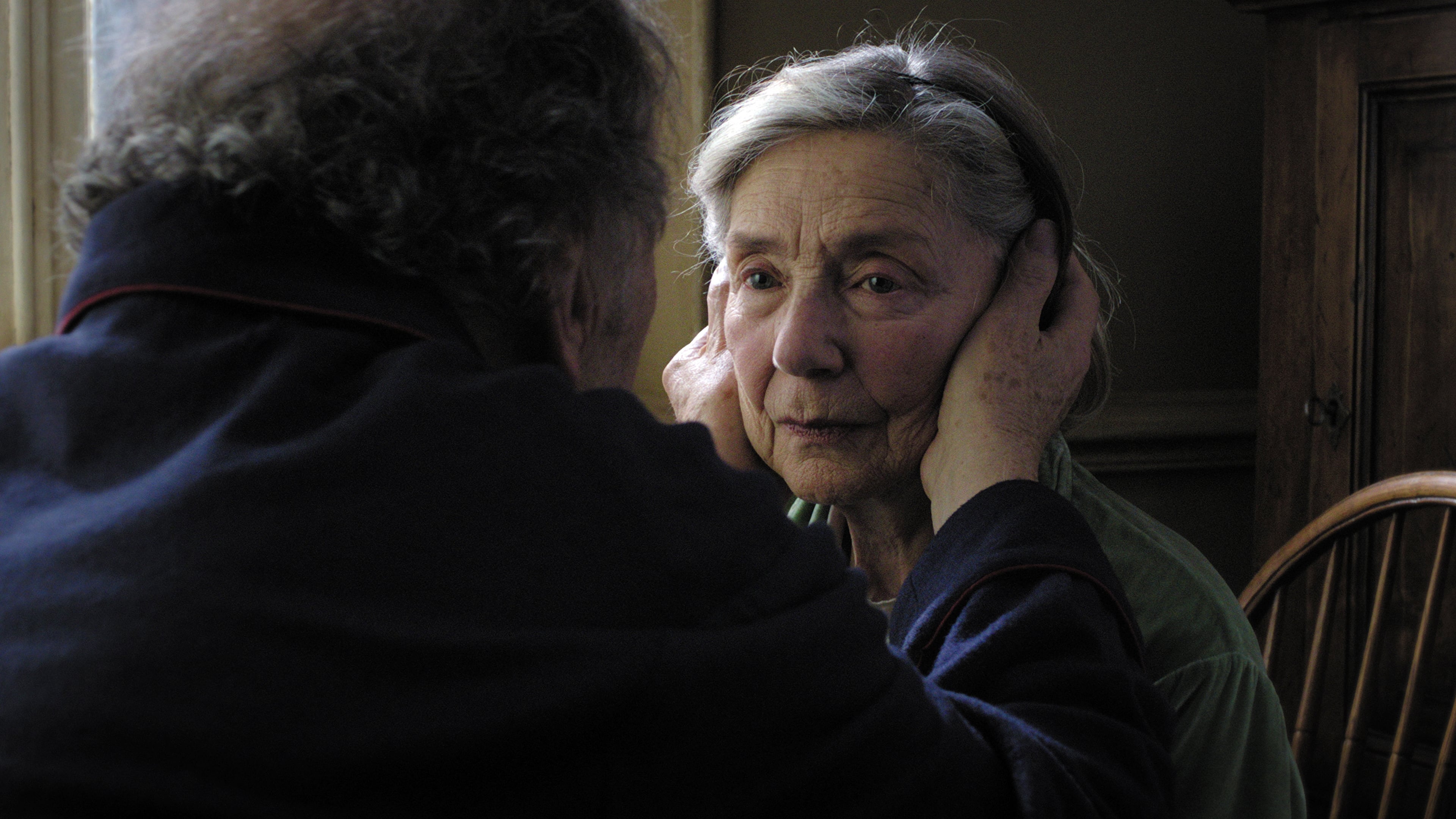
Georges and Anne are in their eighties. They are cultivated, retired music teachers. Their daughter, who is also a musician, lives abroad with her family. One day, Anne has a stroke, and the couple's bond of love is severely tested.
What it’s like
Long, static shots in a cool, muted Paris apartment, with the camera held at a patient distance as if it were another quiet presence in the room. Light is mostly soft and overcast through tall windows, with lamplight and grey daylight doing the work; the palette is restrained, all dove greys, dusty creams and dark wood. Nothing is dressed up, and the stillness lets ordinary domestic routines (a meal, a bath, a door left open) carry real weight. Sound is sparse: a piano piece in a concert hall, the hush of an empty flat, the occasional bird or traffic murmur from outside. Pacing is deliberate and unhurried, and the emotional register is intimate, restrained and quietly devastating, with dignity and tenderness weighing against helplessness. Its people are an elderly couple whose long devotion is slowly tested by illness, and the arc is one of unflinching care rather than resolution. Intensity is low on spectacle but high on emotional difficulty: there is no gore or action, though there are scenes of physical decline, sickness and one disturbing act of violence that lands with sudden, painful stillness. Best for viewers who want a grave, humane, slow-burning film about love and mortality, watched when they are ready for something heavy.
More films like Amour
Closest in mood, pacing and theme. Tell us why you loved Amour and we’ll explain which ones fit you.