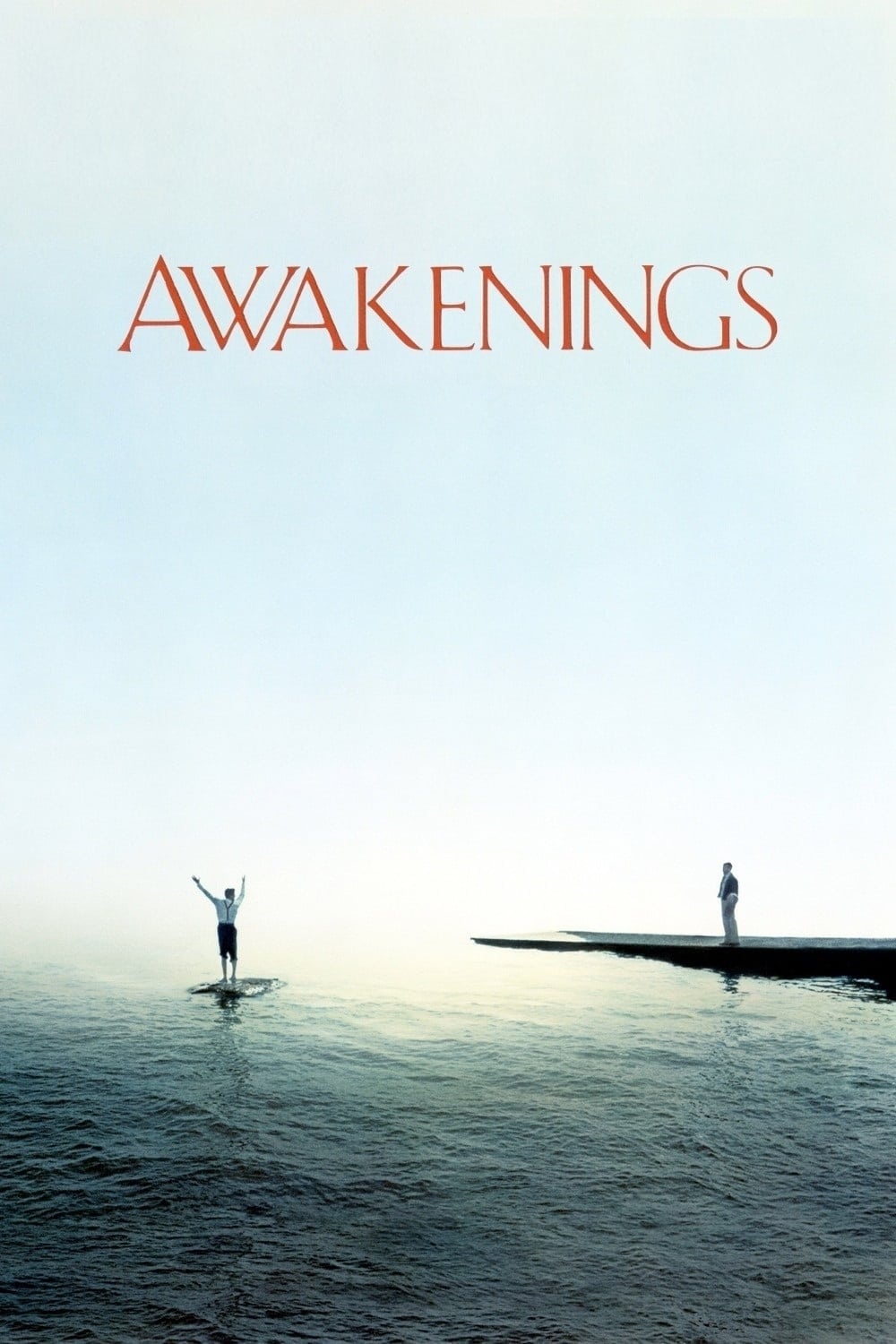
Awakenings
1990 · Directed by Penny Marshall
Original language: English
- drama
The story
Dr. Malcolm Sayer, a shy research physician, uses an experimental drug to "awaken" the catatonic victims of a rare disease. Leonard is the first patient to receive the controversial treatment. His awakening, filled with awe and enthusiasm, proves a rebirth for Sayer too, as the exuberant patient reveals life's simple but unutterably sweet pleasures to the introverted doctor.
What it’s like
Soft, hospital-grey light gives way to warm amber whenever the wards open up, and Penny Marshall keeps the camera patient and unhurried, lingering on hands, faces and the slow sweep of a room through long, steady takes. The palette is muted and clinical in the early scenes, with fluorescent corridors and pale linen, then slowly warms as the patients stir, with bright dresses, sunlit gardens and the tactile clutter of a 1969 New York ward. Sound is restrained: a gentle orchestral score rises and falls around quiet rooms, and much of the emotional weight rests on silence, breath and the scrape of a chair. The mood is bittersweet and tender, with a current of hope that never quite forgets how fragile recovery is. It suits a rainy afternoon, a comfort watch with someone close, or an evening when you want to feel moved without being overwhelmed. Pacing is measured, with scenes that let feelings settle before moving on. Robin Williams and Robert De Niro carry the arcs: a withdrawn doctor slowly learning to live through a joyful, impulsive patient, and a man rediscovering a world he has lost. Intensity is low: illness and decline are shown with care, with no graphic violence, gore or sexual content, and only mild peril. It is for viewers who want an earnest, humane drama about connection, second chances and small pleasures.
More films like Awakenings
Closest in mood, pacing and theme. Tell us why you loved Awakeningsand we’ll explain which ones fit you.