Blonde
Directed by Andrew Dominik
- drama
The story
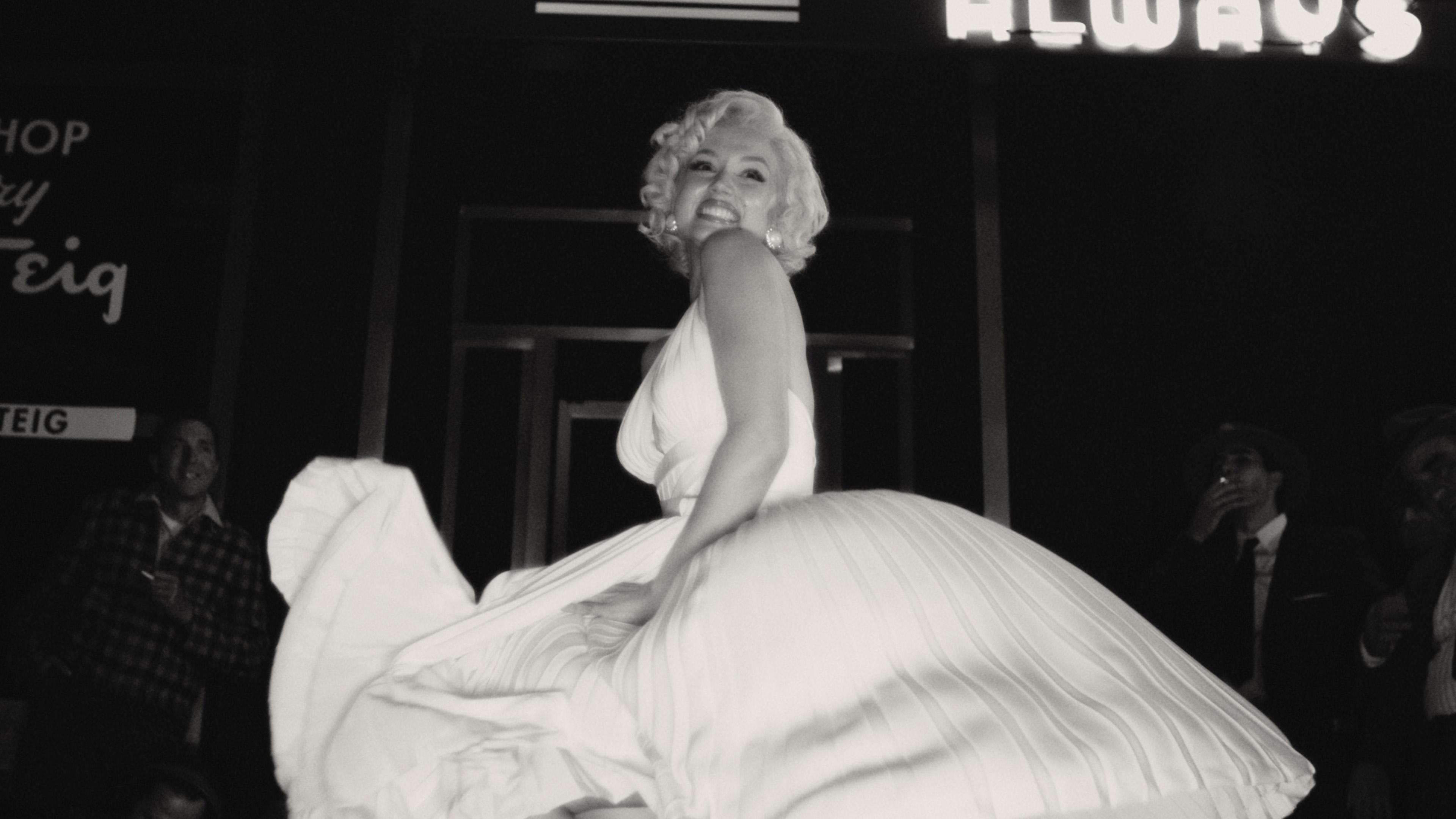
From her volatile childhood as Norma Jeane, through her rise to stardom and romantic entanglements, this reimagined fictional portrait of Hollywood legend Marilyn Monroe blurs the lines of fact and fiction to explore the widening split between her public and private selves.
What it’s like
Saturated, dreamlike close-ups and restless handheld camera, shifting between saturated Technicolor-style studio glamour and grainy, washed-out 16mm-looking domestic and institutional scenes, with flash-bulb pops and rolling film-gate flicker used as a visual language of fracture. Light is often hot and artificial: stage lamps, cramped bulb-lit dressing rooms, sickly fluorescents, and dim bedrooms lit by a single lamp. The score is swelling and orchestral one moment, then abruptly stripped to whispers, echo and distorted hush. Vibe: feverish, claustrophobic, mournful. This is a long, heavy experience, not a lighthearted one, and it suits a deliberate night in rather than background viewing. Intensity is high: explicit rape and sexual assault, miscarriage and pregnancy trauma, suicide attempts, overdose, emotional abuse, and sustained psychological cruelty, all rendered directly and often uncomfortably close. Arcs trace a young woman's fragmenting sense of self as men and the studio system remake her, and the film stays inside her disorientation. Made for viewers who want an intense, stylized, unflinching study of celebrity and trauma, not gentle entertainment.
More films like Blonde
Closest in mood, pacing and theme. Tell us why you loved Blonde and we’ll explain which ones fit you.