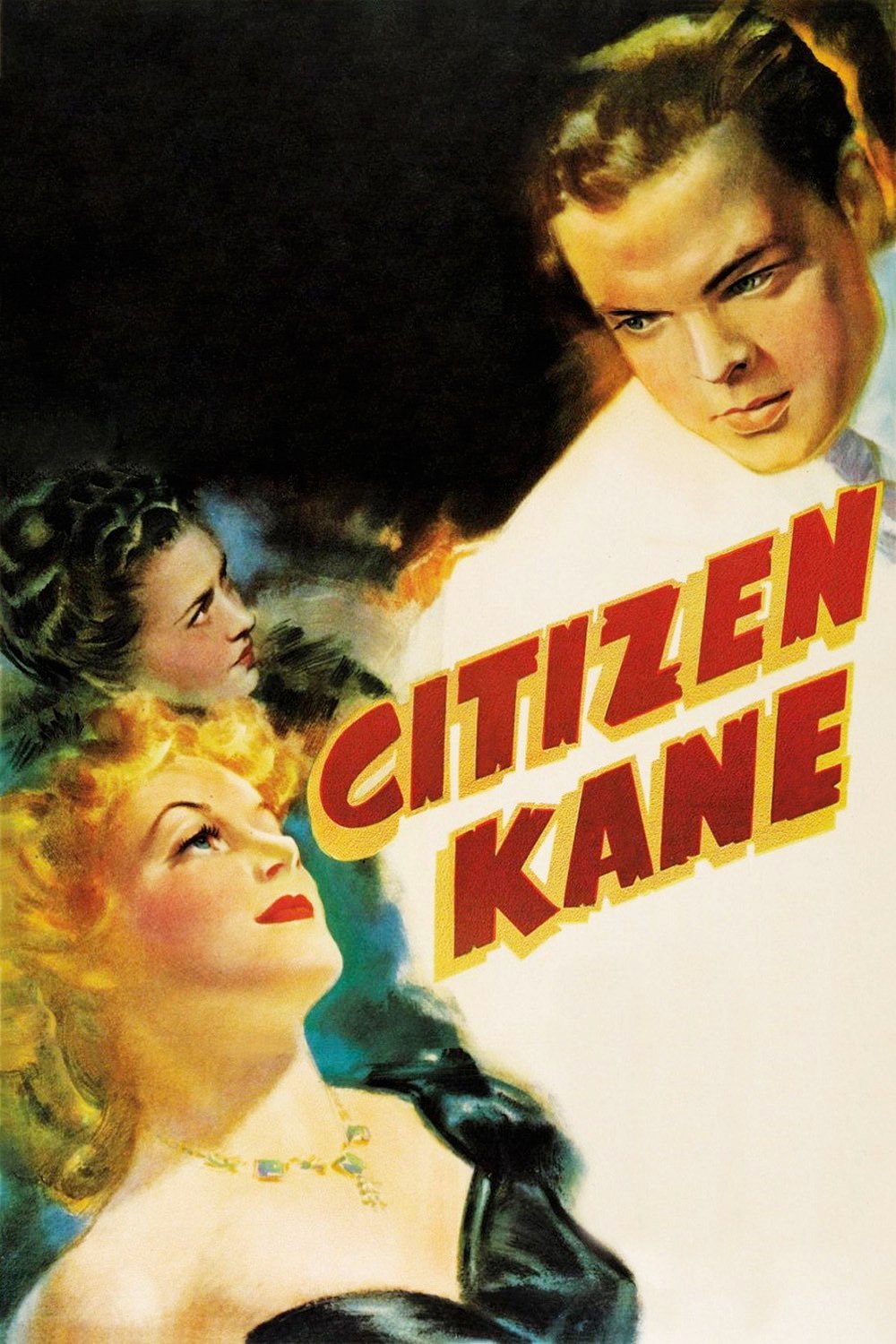
Citizen Kane
1941 · Directed by Orson Welles
Original language: English
- mystery
- drama
The story
Newspaper magnate Charles Foster Kane is taken from his mother as a boy and made the ward of a rich industrialist. As a result, every well-meaning, tyrannical or self-destructive move he makes for the rest of his life appears in some way to be a reaction to that deeply wounding event.
What it’s like
Deep-focus black-and-white photography, with ceilings and foregrounds sharp at once, lets figures sit small inside vast, shadowed Xanadu-like rooms; low-angle shots loom over tycoons while flat, bright newsroom light and rain-slick nighttime streets give the story its hard edges. Dissolves, tilted corridors and fragmented flashbacks move briskly, and Bernard Herrmann's brassy, restless score swells beneath clipped newspaper voices and echoing rooms. The vibe is brooding, ironic and grand, a museum of a life full of ornament and emptiness, with a mysterious undertow. It suits a late-night viewing with the lights off, or a sober, thoughtful evening when you want something that rewards close attention. Intensity is low: no gore, little physical violence, and the occasional raised voice or cold cruelty that cuts more than it shocks. The rhythm is talky and intricate, with long dialogue scenes and quick montages. It is for people who love the craft of film history, character studies of ambitious men coming apart, and stories where the puzzle of a single word matters more than the answer.
More films like Citizen Kane
Closest in mood, pacing and theme. Tell us why you loved Citizen Kaneand we’ll explain which ones fit you.