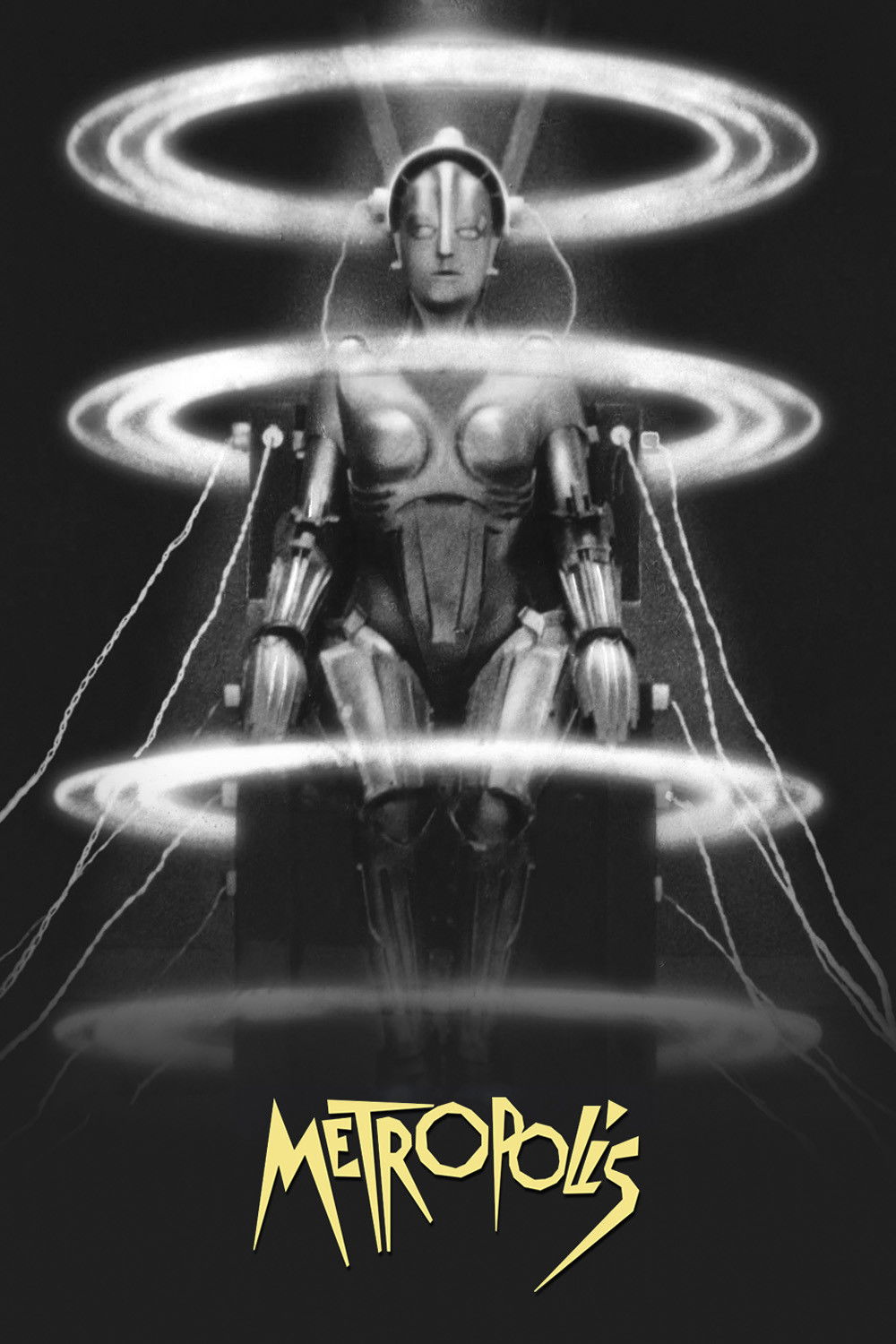
Metropolis
1927 · Directed by Fritz Lang
Original language: German
- drama
- science fiction
The story
In a futuristic city sharply divided between the rich and the poor, the son of the city's mastermind meets a prophet who predicts the coming of a savior to mediate their differences.
What it’s like
Vast expressionist sets of towering skyscrapers, stacked highways and brutal machine halls, shot in high-contrast black and white with a grainy silver sheen, the city glowing in deep shadow and the workers' underground in heavy, smoky dark. Expressionist staging dominates: sharp diagonals, crowds moving in rhythmic, geometric blocks, dramatic lighting that carves faces and machinery into hard shapes, and sudden flickers of superimposed imagery that feel almost hallucinatory. The score, in its restored versions, is orchestral and insistent, with pounding machine rhythms and swelling melodrama rather than quiet. Its vibe is grand, feverish, and operatic, a silent-era spectacle that suits a dedicated film night or a curious weekend when you want to watch a visual experiment unfold. The pace is deliberate and melodramatic, with long stretches of spectacle punctuated by frantic chases and crowd scenes, and its emotional register runs earnest and heightened: a privileged young man's awakening to the suffering beneath his city, and the bond that forms across the class divide. Violence exists, including a machine-related disaster and a riot with fire and some brutal scenes, but it is stylised and mostly shown at a distance rather than lingered on. For people who want silent-film grandeur, dystopian imagery and a mood more feverish than cozy.
More films like Metropolis
Closest in mood, pacing and theme. Tell us why you loved Metropolisand we’ll explain which ones fit you.