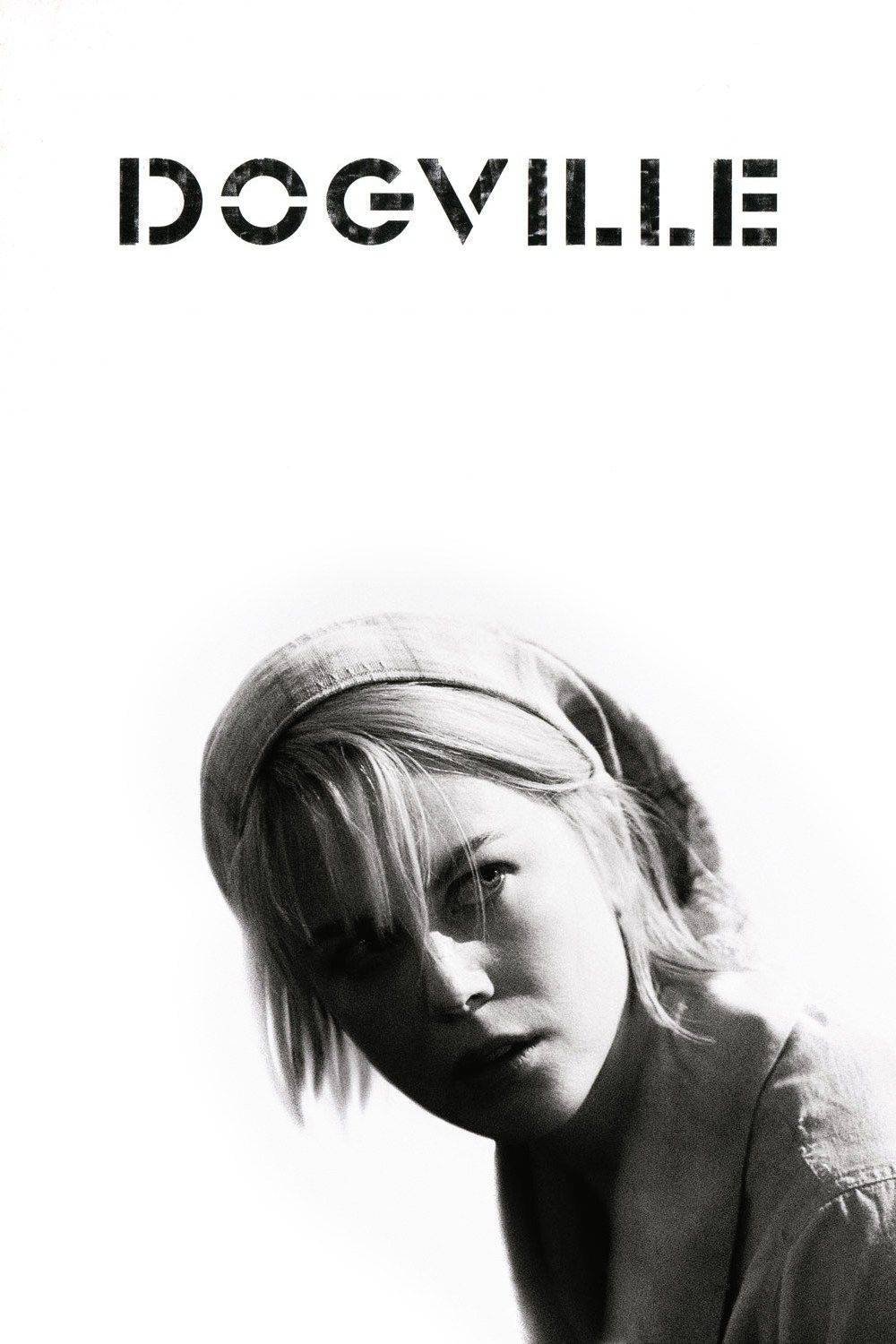
Dogville
2003 · Directed by Lars von Trier
Original language: English
- crime
- drama
- thriller
The story
A woman on the run from the mob is reluctantly accepted in a small Colorado community in exchange for labor, but when a search visits the town, she learns that their support has a price.
What it’s like
Bare wooden floors marked out in white chalk, with no walls, doors or set dressing beyond a few props, and a stark theatrical staging that makes every house and street feel like a diagram of a town. The light is flat and overhead, the palette is near-monochrome greys and browns, and the camera hovers in a fixed, detached overhead view, cutting in and out with a narrator's voice guiding the viewer like a stage manager. Sound is sparse: a few piano chords, the tick of a clock, and long stretches of silence that make each exchange hang. The mood is bleak, cold and deliberately artificial, with a sense of slow, mounting dread rather than shock. Its pacing is measured and sometimes punishing, its emotional register one of moral unease, and the arc follows a stranger's gradual, humiliating entanglement with a community that starts out welcoming and turns cruel. Intensity is high: sustained psychological cruelty, humiliation, and sexual assault, with the worst of it largely implied or staged in ways that land harder than gore. It suits viewers who want a provocative, uncomfortable piece about complicity and power, not comfort, and who can sit with a film that refuses to look away.
More films like Dogville
Closest in mood, pacing and theme. Tell us why you loved Dogvilleand we’ll explain which ones fit you.