Dracula
Directed by Tod Browning
- horror
The story
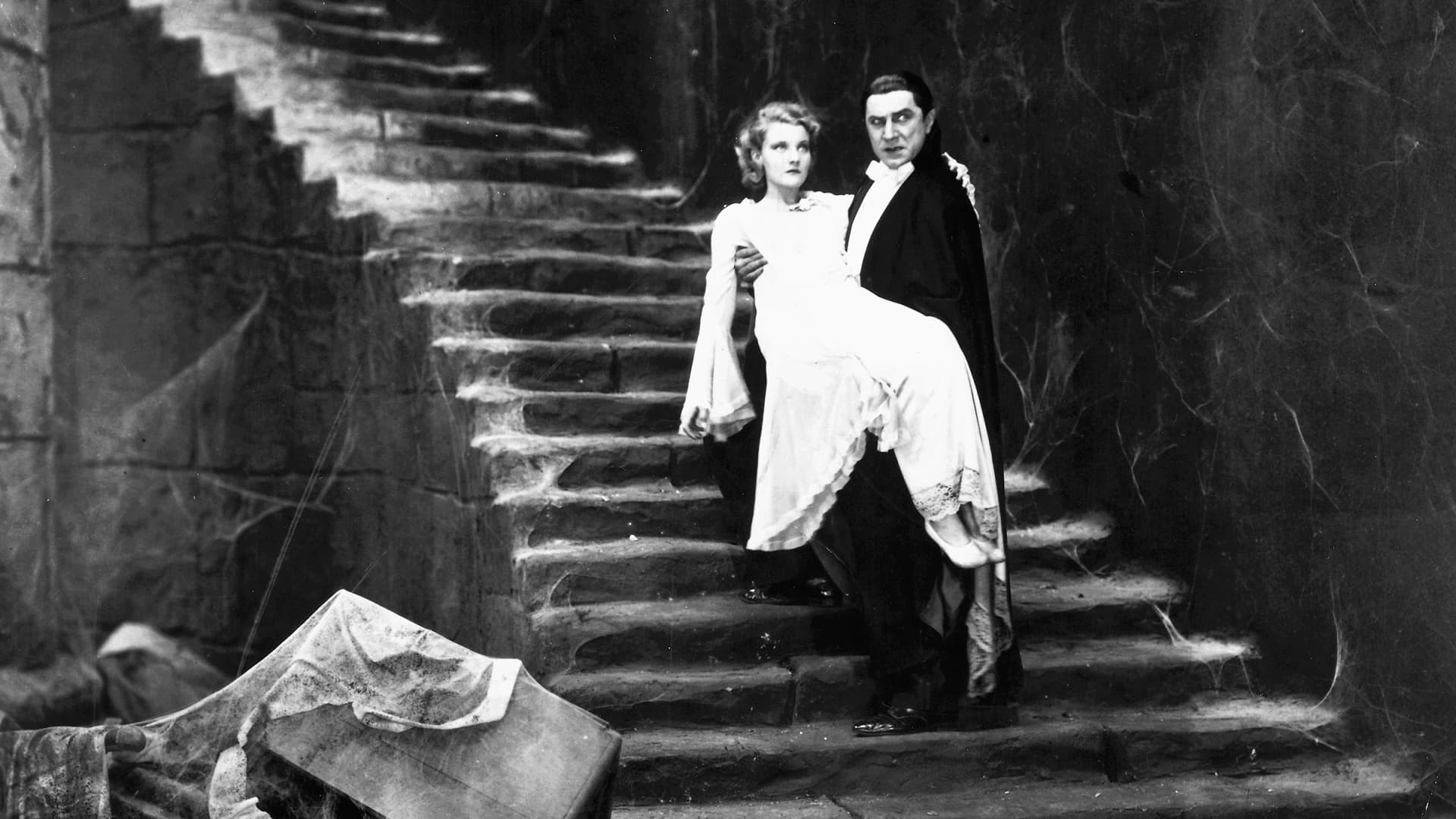
A British estate agent travels to Transylvania to meet with the mysterious Count Dracula, who is interested in leasing a London castle. After Dracula enslaves and drives the agent to insanity, the pair return to London together, where Dracula, a secret bloodsucker, begins preying on socialites.
What it’s like
Stagey and shadow-soaked, with fog-choked studio sets, painted backdrops, and a camera that mostly holds still and lets people walk into and out of frame. Long, unhurried takes in cavernous rooms lit by a single candle or a thin shaft of moonlight, the blacks deep and the faces pale and stiff, give it the flat, theatrical texture of 1930s Hollywood. Its sound is sparse: long stretches of near silence broken by wolf howls, bat flutters, and a hushed, almost mournful string underscore that appears only when the dread needs it. The mood is formal and dreamy, a slow, eerie unease rather than jump-scare terror, with a dry, faintly comic tone in the London drawing-room scenes. The pacing is languid and the intensity low: there is no gore, bloodshed is implied rather than shown, and the menace is more about atmosphere, hypnotic stares, and creeping dread. It suits a rainy evening, a Halloween double feature, or an old-movie night for people who enjoy gothic atmosphere, classic horror history, and slow-burn chills.
More films like Dracula
Closest in mood, pacing and theme. Tell us why you loved Dracula and we’ll explain which ones fit you.