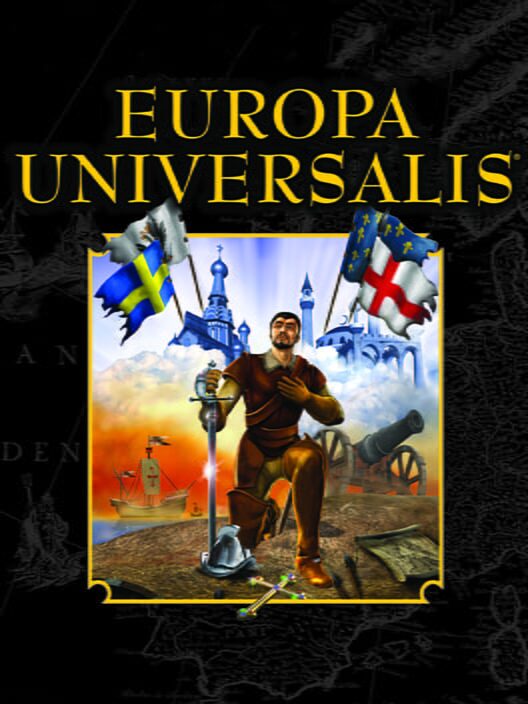
Europa Universalis
2000
- simulator
- strategy
- turn-based strategy (tbs)
- fantasy
- historical
- 4x (explore, expand, exploit, and exterminate)
- single player
- multiplayer
The story
Based on a French board game of the same name, Europa Universalis allows players to take control of a civilization between 1492 and 1792
What it’s like
Dense, map-first screens dominate: a parchment-toned world map of Europe and the Mediterranean, crowded with coloured national borders, small heraldic shields, and dotted trade lines, with the occasional bink video cutscene of period imagery breaking the stillness. The palette is muted ochre, faded blue and dull gold, and the interface reads like an administrative ledger, all panels, tables and tiny numerals, so the atmosphere is one of quiet, almost bureaucratic concentration rather than spectacle. The soundscape is sparse and unobtrusive, with restrained period-flavoured music that rarely demands attention, leaving long stretches of near silence broken by the click of menus. Pacing is slow and deliberate, measured in months and years of in-game time, with turns that tick over in a rhythm you can fall into while doing something else. Tone is cool, patient and analytical, with tension arriving through slow accumulation of rivalry, debt and dynastic luck rather than through action. Violence exists only as abstract war-making on the map, with battles resolved in numbers and no gore or on-screen brutality. It suits a long rainy weekend, a late evening alone, or a session in the background of a quiet afternoon. It is for players who enjoy systems, planning and watching a long history unfold at their own unhurried speed.
More games like Europa Universalis
Closest in mood, pacing and theme. Tell us why you loved Europa Universalisand we’ll explain which ones fit you.