Evangelion: 2.0 You Can (Not) Advance
Directed by Masayuki, Kazuya Tsurumaki
- animation
- science fiction
- action
- drama
The story
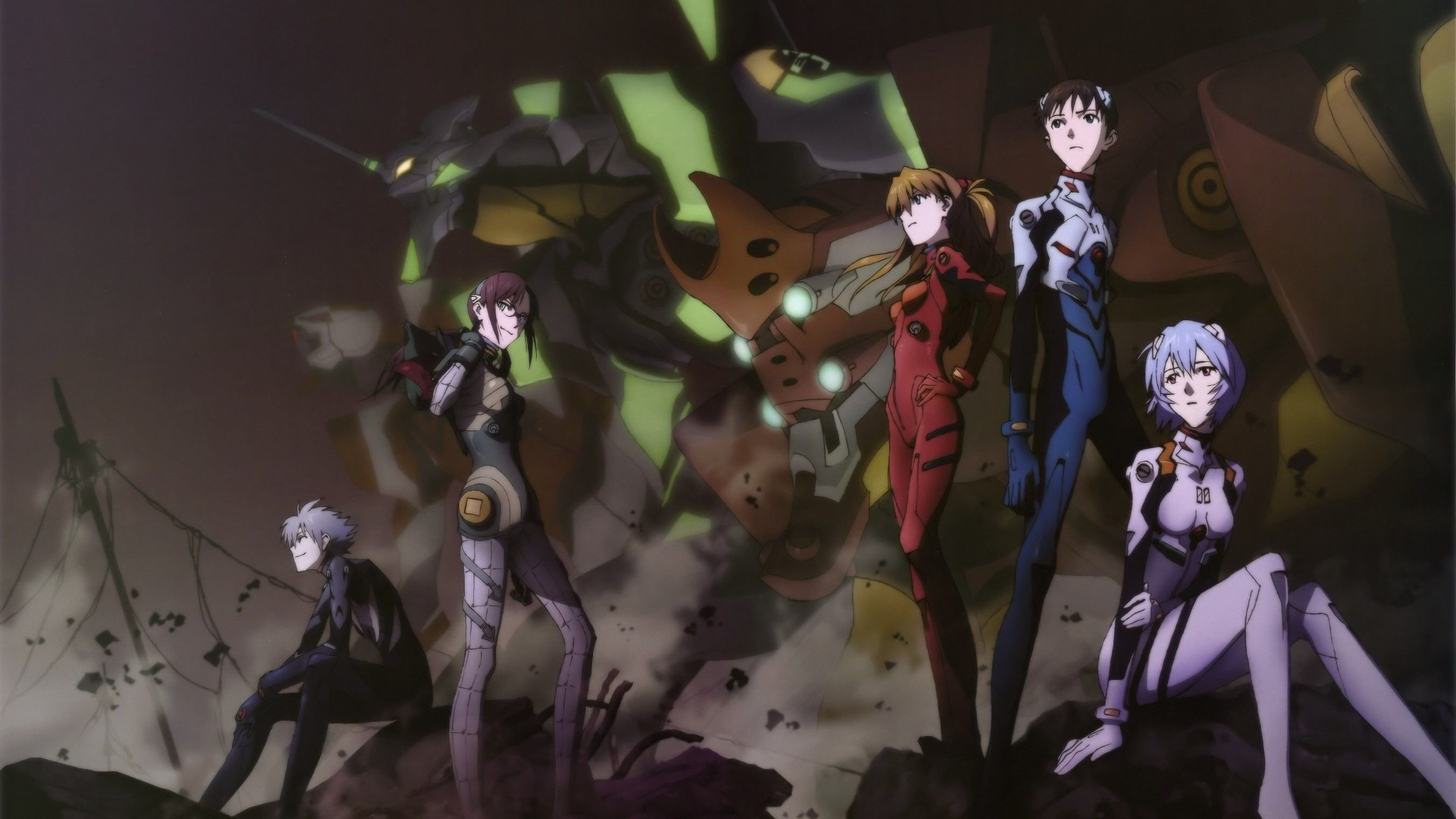
Under constant attack by monstrous creatures called Angels that seek to eradicate humankind, U.N. Special Agency NERV introduces two new EVA pilots to help defend the city of Tokyo-3: the mysterious Makinami Mari Illustrous and the intense Asuka Langley Shikinami. Meanwhile, Gendo Ikari and SEELE proceed with a secret project that involves both Rei and Shinji.
What it’s like
Hand-drawn cel animation meets crisp CG in saturated, high-contrast frames: flat orange sunsets over a concrete city, electric blue and violet in the mecha cockpits, and pale, clinical white in the NERV corridors. Camera work is kinetic, with rapid cuts, dramatic low angles, and fast tracking shots that turn the giant robots into weighty, physical presences. Between the battles the film slows to long, uneasy stillness, such as a figure alone in a dim apartment or a blank stare held past comfort. Sagisu's score swings between swelling orchestral strings and sharp electronic pulses, with silence used to make the quiet scenes feel exposed. The vibe is anxious and grandly melancholic, the kind of mood that suits a late night alone or a long-haul flight. Pacing is relentless in the action sequences and deliberately fraught elsewhere. The emotional arcs follow young people who are isolated, guarded, and struggling to connect with others under enormous pressure. Violence is frequent and often graphic: monsters are ripped apart in splashes of blood, and city destruction is large-scale and bleak. Psychological distress and disturbing imagery run throughout, and it is not gentle. It is for viewers who want mecha spectacle with an existential undertow and can handle intensity.
More films like Evangelion: 2.0 You Can (Not) Advance
Closest in mood, pacing and theme. Tell us why you loved Evangelion: 2.0 You Can (Not) Advance and we’ll explain which ones fit you.