Foundation
1951
- psychohistory
- life on other planets
- fiction
- science fiction
- long now manual for civilization
- prophecy
- historians
- robots
- fiction, science fiction, general
- american literature
The story
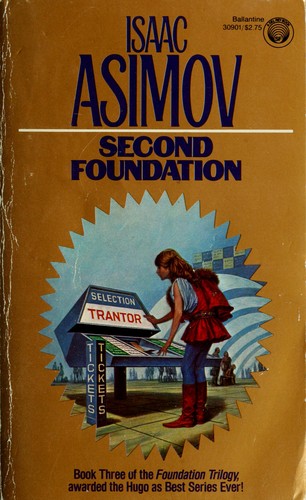
One of the great masterworks of science fiction, the Foundation novels of Isaac Asimov are unsurpassed for their unique blend of nonstop action, daring ideas, and extensive world-building. The story of our future begins with the history of Foundation and its greatest psychohistorian: Hari Seldon. For twelve thousand years the Galactic Empire has ruled supreme. Now it is dying. Only Hari Seldon, creator of the revolutionary science of psychohistory, can see into the future--a dark age of ignorance, barbarism, and warfare that will last thirty thousand years. To preserve knowledge and save mankind, Seldon gathers the best minds in the Empire--both scientists and scholars--and brings them to a bleak planet at the edge of the Galaxy to serve as a beacon of hope for future generations. He calls his sanctuary the Foundation. But soon the fledgling Foundation finds itself at the mercy of corrupt warlords rising in the wake of the receding Empire. And mankind's last best hope is faced with an agonizing choice: submit to the barbarians and live as slaves--or take a stand for freedom and risk total destruction.
What it’s like
Clean, expansive prose with a formal, measured voice and a sense of vast distance: the empire's cold marble corridors, the sweep of star-fields, and a bleak frontier world that feels provisional and underlit. The reading experience is cerebral and patient, built on dialogue, institutional planning, and long stretches of conversation in plain rooms rather than sensory indulgence. Vibe: sweeping, contemplative, quietly ominous, a slow-burn for long-haul flights, a rainy weekend with time to think, or a late-night read when you want the scale of history rather than the immediacy of action. Its arc follows a community of scholars and administrators confronting the limits of foresight, the weight of responsibility, and the uneasy choice between submission and resistance. Violence is present but mostly offstage and brief, with occasional sharp confrontations and political menace rather than gore, graphic cruelty, or sexual content. Tension comes from ideas and strategy more than fear or dread. Best for readers who love big-picture world-building, political intrigue, and the pleasure of ideas unfolding across centuries.
More books like Foundation
Closest in mood, pacing and theme. Tell us why you loved Foundationand we’ll explain which ones fit you.