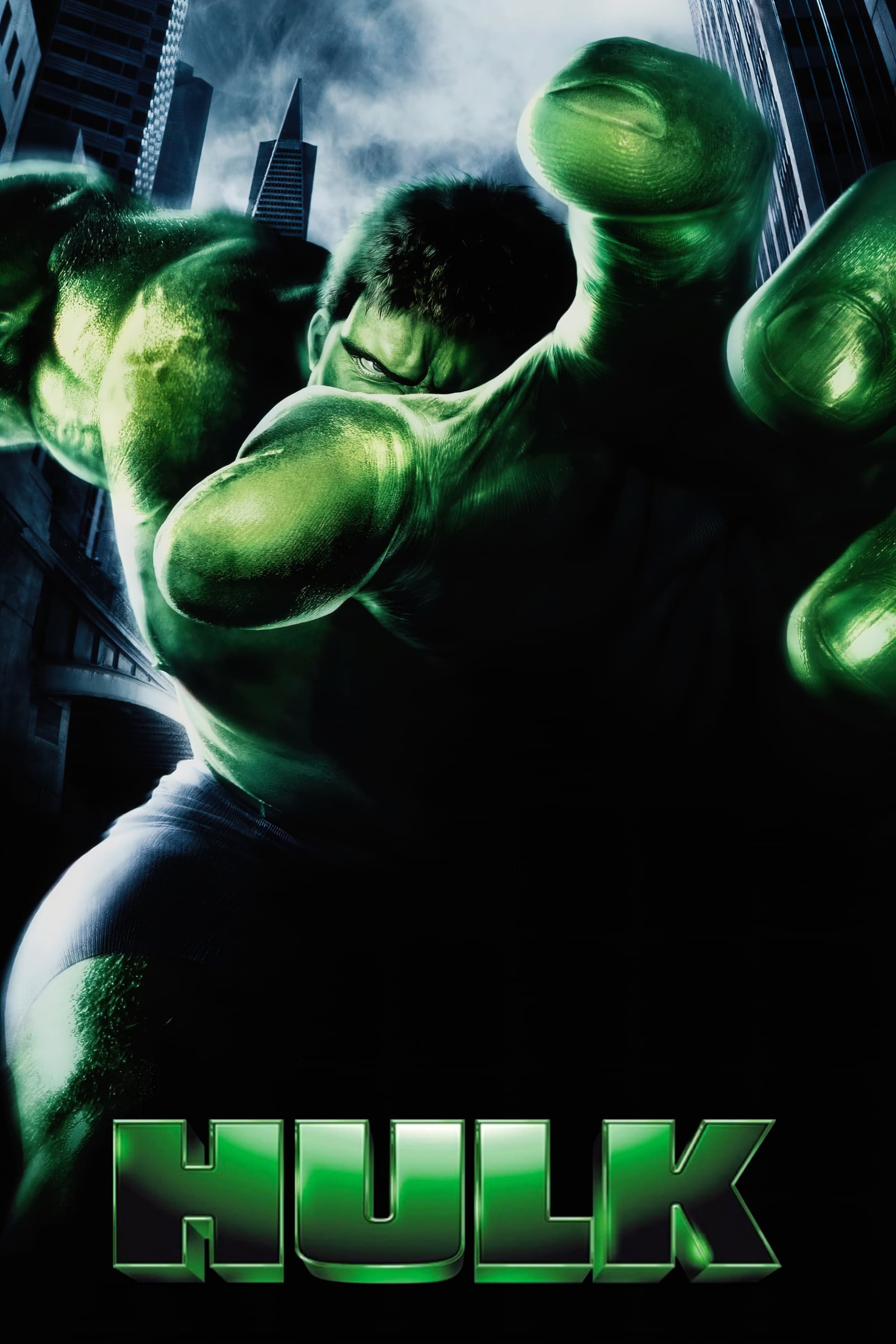
Hulk
2003 · Directed by Ang Lee
Original language: English
- science fiction
- adventure
- action
- drama
The story
Bruce Banner, a genetics researcher with a tragic past, suffers massive radiation exposure in his laboratory that causes him to transform into a raging green monster when he gets angry.
What it’s like
Ang Lee's Hulk looks like a comic panel rendered as a moving graphic novel: split-screen frames slide across the image, comic-book panel wipes cut between scenes, and wide desert vistas and sterile lab interiors sit in cool blue-grey and rust-orange tones. The digital textures are glossy and deliberately stylised, with a dreamlike, unreal quality to the creature sequences and the long rolling landscapes. Sound leans on an orchestral score with pulsing percussion and sudden bursts of brass during the transformations, while quieter scenes rest on soft piano and the hum of machinery. The vibe is brooding and melancholy, a slow, somewhat overwrought family drama that erupts into loud, chaotic set pieces. Pacing is deliberate through the long quiet stretches and then abrupt, with the emotional arc following a withdrawn scientist learning to face a childhood wound and the people who love him. Violence is frequent and loud: the green creature smashes vehicles, buildings and soldiers, with gunfire, explosions and some peril, though it stays mostly bloodless and cartoonish rather than gory. Fear and sadness surface in brief, intense bursts. It suits people who enjoy big-screen superhero spectacle with an art-house streak and a taste for mournful, psychological character work.
More films like Hulk
Closest in mood, pacing and theme. Tell us why you loved Hulkand we’ll explain which ones fit you.