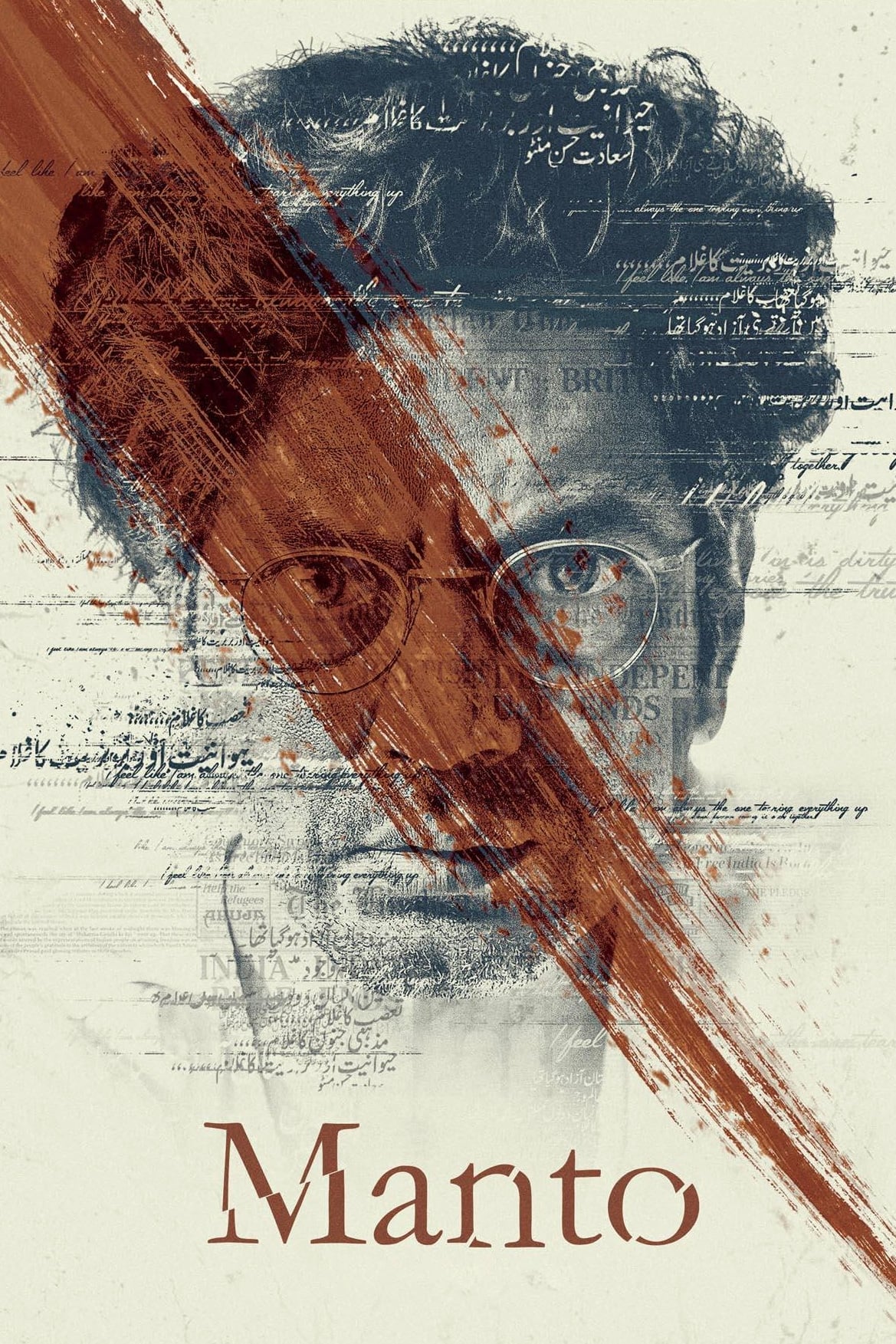
Manto
2018 · Directed by Nandita Das
Original language: Hindi
- drama
- history
The story
In Bombay's seedy-shiny film world, Manto and his stories are widely read and accepted. But as sectarian violence engulfs the nation, Manto makes the difficult choice of leaving his beloved Bombay. In Lahore, he finds himself bereft of friends and unable to find takers for his writings.
What it’s like
Warm, grainy monochrome-leaning period texture gives way to washed, bleached daylight, with Bombay's studio lanes shot in lamplit evenings and crowded tea-stall corners, and Lahore rendered in sparse, sun-hardened interiors. Nandita Das frames her characters in close, unhurried compositions, often holding on a face as it weighs a sentence or a loss, while the score stays restrained, mostly acoustic strings and small bursts of traditional instrumentation that never swell into melodrama. The mood is wistful and quietly bitter, a slow melancholy with flashes of wry humour in the dialogue, and it suits a rainy afternoon or a late evening with the lights low. Its arc follows a writer who is loved for his sharp, unflinching stories and then finds himself stranded and unwanted after Partition, so the film carries a steady undercurrent of exile and grief. Violence is present but restrained: brief communal riot imagery and aftermath, with the horror suggested more than shown, and some frank talk of sexuality and drinking. It suits viewers who want a thoughtful, literate biography with melancholy rather than spectacle, and who are comfortable with the weight of a historical tragedy.
More films like Manto
Closest in mood, pacing and theme. Tell us why you loved Mantoand we’ll explain which ones fit you.