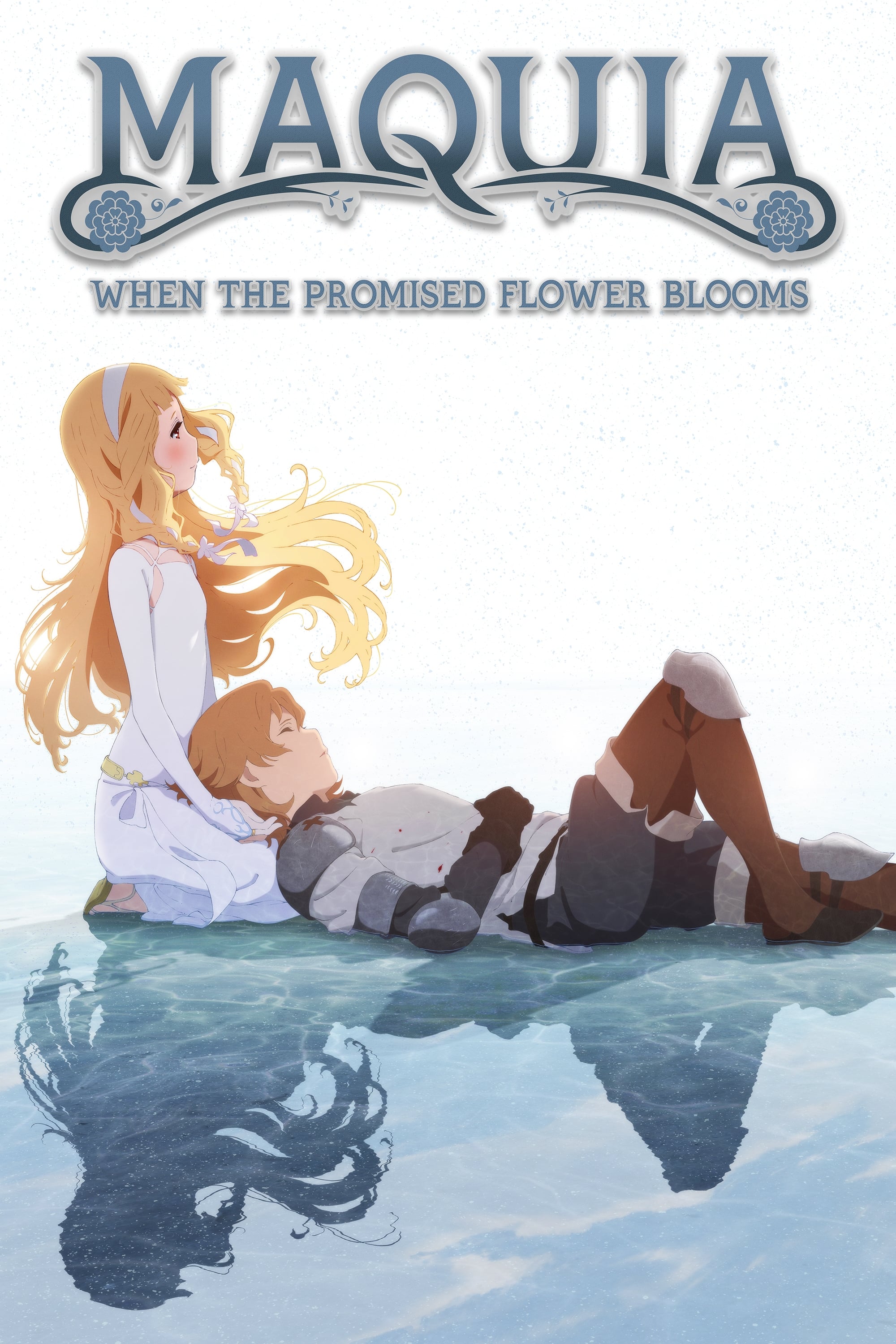
Maquia: When the Promised Flower Blooms
2018 · Directed by Mari Okada
Original language: Japanese
- animation
- drama
- fantasy
The story
Fleeing the war, the immortal Maquia, graced with eternal youth, finds a baby abandoned in the forest and decides to raise it as her own child, sparking a moving story between a mortal and a being who does not age.
What it’s like
Soft, painterly animation with lush watercolour-like backdrops: sun-dappled forests, pale blue dawns, wind moving through tall grass, and a warm, nostalgic palette that turns cooler and greyer as years pass and war drifts across the horizon. Camera work is patient and intimate, lingering on quiet domestic moments like hands sharing a meal or a child asleep in a shaft of light, while the score is gentle and strings-led, swelling with a melancholy tenderness at key emotional beats. The vibe is bittersweet and tender, a slow ache of love and loss, best suited to a rainy afternoon, a good cry on the sofa, or a late evening alone. Pacing is unhurried, with long stretches of everyday life that build toward emotional peaks. Its central arc follows a woman who cannot age choosing to love and raise a child who will, watching that bond deepen through loss and the passing of years. Violence is present, as the story is shaped by war and a military backdrop, but it stays largely off-screen and sits in the background rather than in graphic detail. Dramatic and sad rather than gory, with some fantasy elements such as dragons. Made for viewers who want a tearjerking, emotionally rich story about motherhood, family and the cost of time.
More films like Maquia: When the Promised Flower Blooms
Closest in mood, pacing and theme. Tell us why you loved Maquia: When the Promised Flower Bloomsand we’ll explain which ones fit you.