Mediterraneo
Directed by Gabriele Salvatores
- comedy
- romance
- war
The story
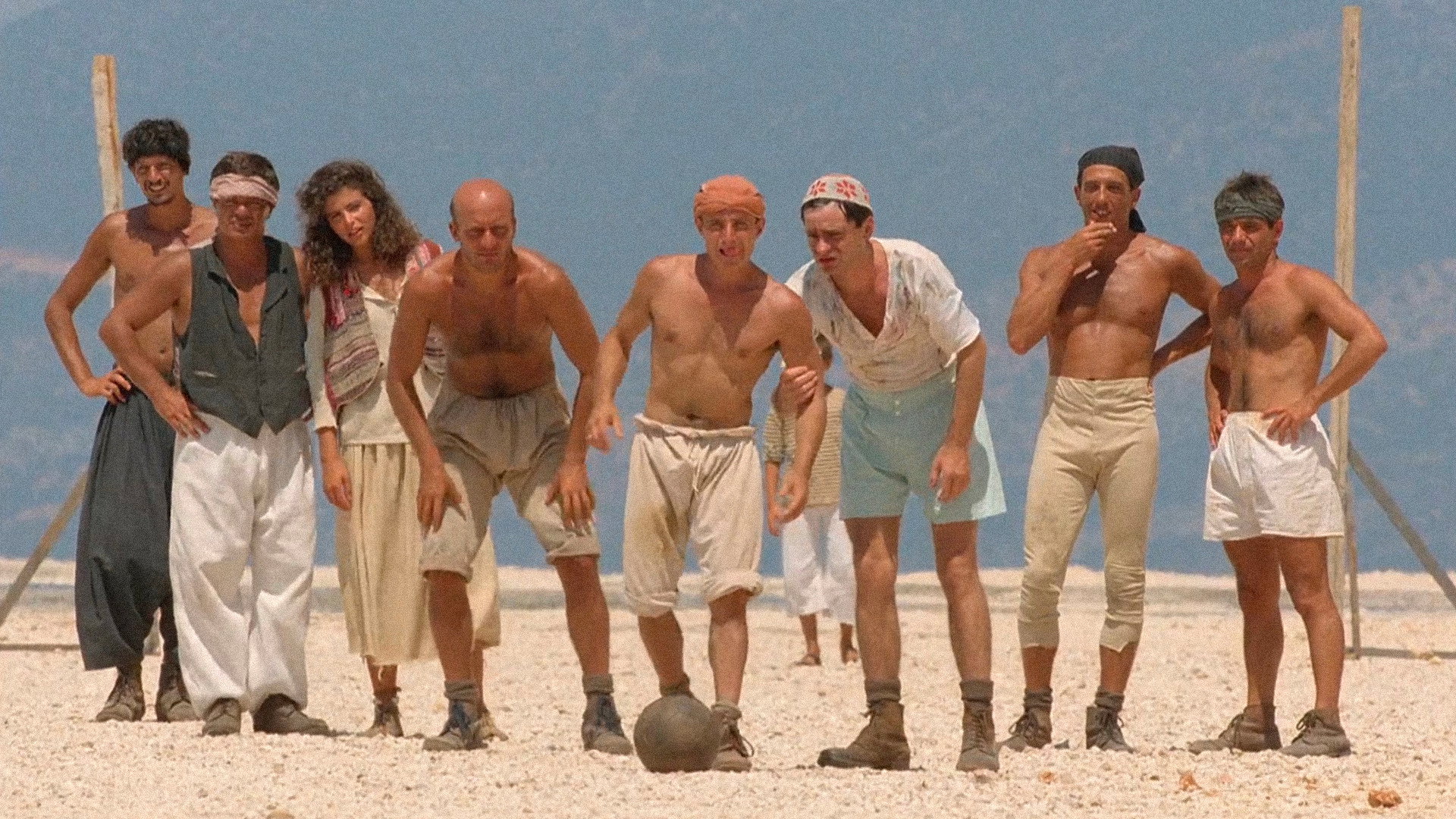
Greek Sea, World War II. An Italian ship leaves a handful of soldiers in a little island; their mission is to spot enemy ships and to hold the island in case of attack. The village of the island seems abandoned and there isn't a single enemy in sight, so the soldiers begin to relax a little. Things change when their ship is hit and destroyed by the enemy, and the soldiers find themselves abandoned there.
What it’s like
Warm, sun-bleached and unhurried, with Aegean light pouring over whitewashed walls, blue doors and wind-dried scrub, and a palette of ochre, turquoise and faded olive. Salvatores frames the island in wide, easy compositions and lets scenes breathe, so the camera often just lingers on a sleepy village square or a goat picking its way across rock. The score is light and melodic, with accordion and soft strings, and the quiet between lines carries as much as the dialogue. The vibe is gentle, wry and faintly melancholy, a comfortable watch for a lazy afternoon, a summer evening or a long rewatch with a glass of wine. Pacing is loose and episodic, with broad, affectionate comedy that slowly gives way to a bittersweet reflection on belonging and the absurdity of war. The emotional arc follows a group of unlikely men who drift from restless bravado into an unexpected, tender contentment, and the tone turns gently wistful. Violence is rare and brief, mostly offscreen or incidental, with no gore and little menace; the tension is mild and the darkness understated. Suited to viewers who like character-driven comedy with a touch of melancholy, and who enjoy films that treat their fools with humanity.
More films like Mediterraneo
Closest in mood, pacing and theme. Tell us why you loved Mediterraneo and we’ll explain which ones fit you.