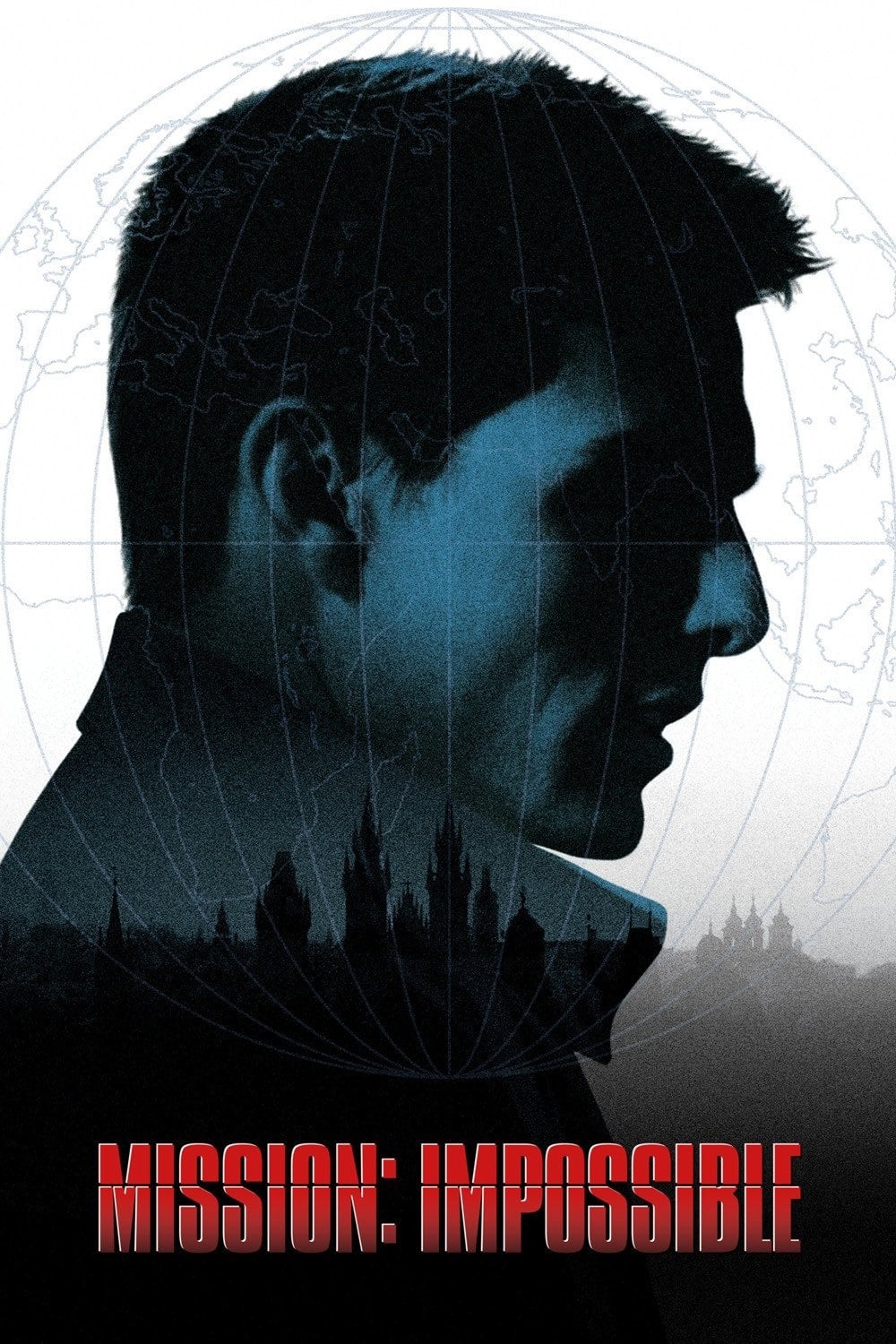
Mission: Impossible
1996 · Directed by Brian De Palma
Original language: English
- adventure
- action
- thriller
The story
When Ethan Hunt, the leader of a crack espionage team whose perilous operation has gone awry with no explanation, discovers that a mole has penetrated the CIA, he's surprised to learn that he's the prime suspect. To clear his name, Hunt now must ferret out the real double agent and, in the process, even the score.
What it’s like
Crisp, controlled widescreen compositions built around stillness and then rupture: long quiet stretches in dim embassy corridors, Parisian rooftops and sterile Langley offices lit in cool fluorescent blue and tungsten amber, interrupted by sudden hard-edged set pieces. The famous Langley sequence is a single held, gleaming tension of lowered bodies and ticking glass, while the Prague and Paris scenes shift to sweaty, handheld urgency. Glossy 35mm textures, rich shadows, and a bright, slightly cold palette give it the sheen of a late-nineties prestige spy film. Danny Elfman's brassy, nervous score pulses under the silences, and the sound design favours clipped dialogue, muffled phones and the low hum of machines. The vibe is taut, polished and playful, a steady pulse of suspicion and nerve that suits a Friday night with the lights down, or a rewatch when you want clever tradecraft with a bit of glamour. Pacing is controlled, with plenty of breath between escalations. Emotionally it stays cool and reserved; Ethan is a lone figure under pressure, slowly learning who he can trust. Violence is moderate: brief bursts of fistfights and gunfire, a few tense deaths, no gore, mild menace and some brief sexual innuendo. For viewers who like heist-style puzzle plotting, slick set pieces and a lean, adult thriller without excess.
More films like Mission: Impossible
Closest in mood, pacing and theme. Tell us why you loved Mission: Impossibleand we’ll explain which ones fit you.