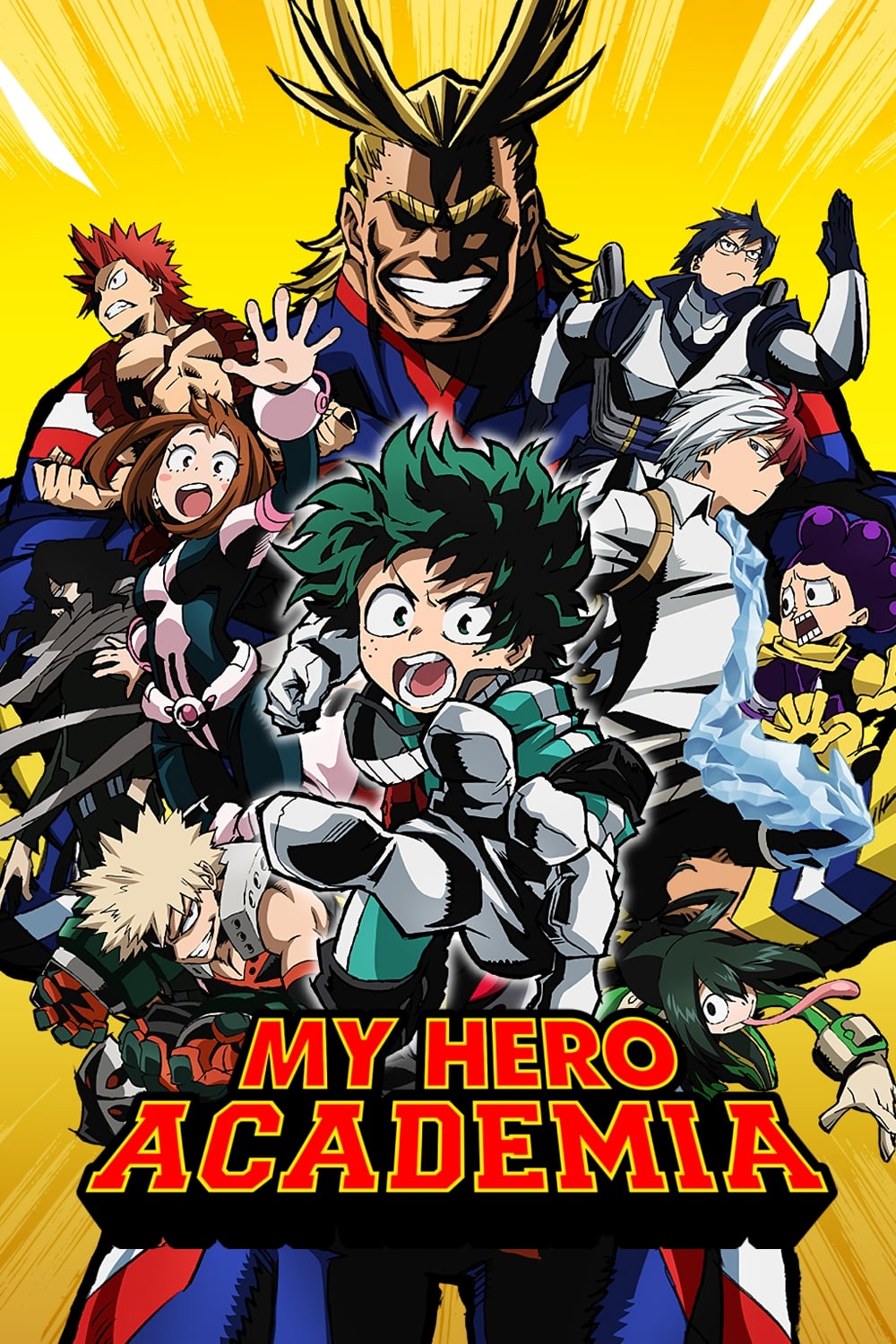
My Hero Academia
2016
Original language: Japanese
- action & adventure
- animation
- sci-fi & fantasy
The story
Izuku has dreamt of being a hero all his life—a lofty goal for anyone, but especially challenging for a kid with no superpowers. That’s right, in a world where eighty percent of the population has some kind of super-powered "quirk," Izuku was unlucky enough to be born completely normal. But that’s not enough to stop him from enrolling in one of the world’s most prestigious hero academies.
What it’s like
Bright, saturated anime colour does most of the work here: primary reds, electric blues and sunny yellows against clean cel-shaded linework, with explosive quirk effects that flare across the screen in bursts of light. The city streets are busy and sun-warmed, and the training grounds and school halls feel open and airy, though the camera often lunges into close-ups and hard, fast cuts whenever a fight begins. Scoring leans on bombastic orchestral swells and rock-tinged anthems that spike with each new power reveal, while quieter scenes settle into soft piano and gentle ambient tones. The vibe is earnest, bright and high-energy, with moments of real ache about being left behind, suited to a Saturday-morning binge, a comfort rewatch, or something to keep a restless evening upbeat. Pacing is brisk and episodic, building toward long-running tournament arcs. Its young protagonist's arc is a steady climb from doubt toward belief, and the emotional register swings between warm camaraderie and heavier stretches about bullying and a cruel parent. Violence is frequent and stylised, with punches, collapsing buildings and blood sometimes shown in fights, but it reads as cartoon action rather than gore, and the darker family and bullying material can sting. Made for fans of shonen superhero stories who enjoy earnest friendship and big, expressive spectacle.
More TV shows like My Hero Academia
Closest in mood, pacing and theme. Tell us why you loved My Hero Academiaand we’ll explain which ones fit you.