Nineteen Eighty-Four
1949
- futurology
- censorship
- surveillance
- rebels
- sting operations
- historical negationism
- memory holes
- thoughtcrime
- outer party
- resistance movements
The story
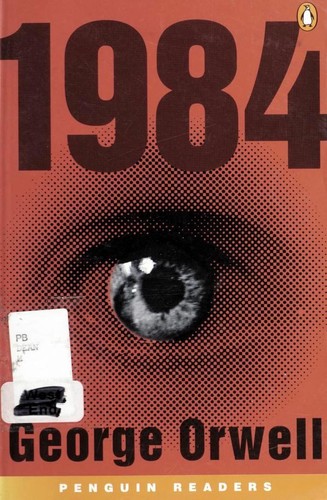
Nineteen Eighty-Four: A Novel, often referred to as 1984, is a dystopian social science fiction novel by the English novelist George Orwell (the pen name of Eric Arthur Blair). It was published on 8 June 1949 by Secker & Warburg as Orwell's ninth and final book completed in his lifetime. Thematically, Nineteen Eighty-Four centres on the consequences of totalitarianism, mass surveillance, and repressive regimentation of persons and behaviours within society. Orwell, himself a democratic socialist, modelled the authoritarian government in the novel after Stalinist Russia. More broadly, the novel examines the role of truth and facts within politics and the ways in which they are manipulated. ---------- Also contained in: [Novels (Animal Farm / Burmese Days / Clergyman's Daughter / Coming Up for Air / Keep the Aspidistra Flying / Nineteen Eighty-Four)](https://openlibrary.org/works/OL1168045W) [Novels (Animal Farm / Nineteen Eighty-Four)](https://openlibrary.org/works/OL1167981W) [Orwell's Nineteen Eighty-Four: Text, Sources, Criticism](https://openlibrary.org/works/OL1168095W)
What it’s like
Bleak, claustrophobic and airless, this is a book of grey London winters: drab municipal interiors, paper-thin walls, a telescreen's hum that never switches off, and the constant sense of being watched. The prose is plain, clipped and unadorned, with sudden flashes of sensory detail (the smell of cabbage, the gritty chill of cheap chocolate, the dim slant of a rented room's window) that feel like small rebellions against an overwhelming grey. Its mood is oppressive dread braided with quiet, stubborn longing, a kind of cold paranoia that lingers long after the last page. The pacing is measured, with long stretches of inner rumination broken by moments of sharp tension, and the book is best read slowly, in a quiet room, when you can give yourself over to its unease. Intensity runs high in emotional terms: fear, surveillance, psychological cruelty and interrogation are described in unflinching detail, with brief but harrowing scenes of physical torture and violence. It suits readers who want political fiction that unsettles rather than comforts, and anyone drawn to stark, morally serious novels about truth, memory and the fragility of the individual mind.
More books like Nineteen Eighty-Four
Closest in mood, pacing and theme. Tell us why you loved Nineteen Eighty-Fourand we’ll explain which ones fit you.