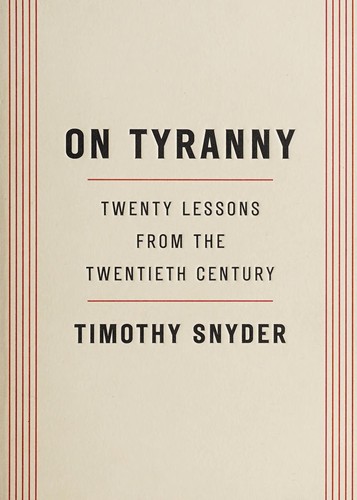
On Tyranny
2017
- tyranny
- despotism
- political ethics
- modern history
- political culture
- social science
- democracy
- 20th century
- modern
- twentieth century
The story
In previous books, Holocaust historian Timothy Snyder dissected the events and values that enabled the rise of Hitler and Stalin and the execution of their catastrophic policies. With Twenty Lessons, Snyder draws from the darkest hours of the twentieth century to provide hope for the twenty-first. As he writes, "Americans are no wiser than the Europeans who saw democracy yield to fascism, Nazism and communism. Our one advantage is that we might learn from their experience."
What it’s like
Clipped, declarative sentences and short numbered chapters make this a brisk, urgent read, more like a sustained argument than a sweeping narrative. The voice is that of a historian speaking directly to a reader across a kitchen table: measured, unhurried in its sentences but insistent in its purpose, with sober references to 20th-century Europe that arrive like quiet alarms. Its atmosphere is somber and watchful, a kind of civic unease softened by an undercurrent of hope and practical advice. There is no violence on the page beyond historical reference; the darkness is in the subject matter and in the stakes of the argument rather than in graphic detail, so it lands as dread about the present more than horror in the past. Reading it works best in a focused, quiet hour, a Sunday morning with coffee or a late evening when the news has left you restless and want something steadier than a headline. It suits readers who want political thinking that is grounded, concrete and short enough to finish in a sitting, and who would rather be handed tools for vigilance than simply frightened.
More books like On Tyranny
Closest in mood, pacing and theme. Tell us why you loved On Tyrannyand we’ll explain which ones fit you.