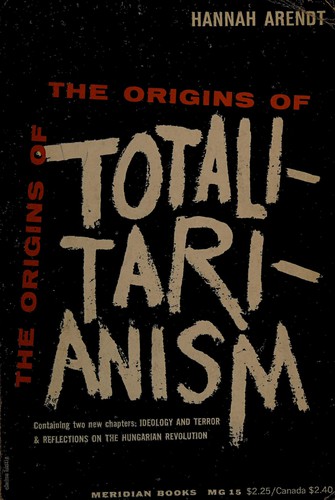
The Origins of Totalitarianism
1951
- antisemitism
- imperialism
- totalitarianism
- philosophy, german
- antisémitisme
- impérialisme
- totalitarisme
- histoire
- juifs
- political science
The story
**Hannah Arendt's definitive work on totalitarianism and an essential component of any study of twentieth-century political history** The Origins of Totalitarianism begins with the rise of anti-Semitism in central and western Europe in the 1800s and continues with an examination of European colonial imperialism from 1884 to the outbreak of World War I. Arendt explores the institutions and operations of totalitarian movements, focusing on the two genuine forms of totalitarian government in her time—Nazi Germany and Stalinist Russia—which she adroitly recognizes were two sides of the same coin, rather than opposing philosophies of Right and Left. From this vantage point, she discusses the evolution of classes into masses, the role of propaganda in dealing with the nontotalitarian world, the use of terror, and the nature of isolation and loneliness as preconditions for total domination.
What it’s like
Dense, unhurried prose that moves like a long argument rather than a story: sentences stacked with qualification, archival detail, and the cool precision of a scholar who will not let a comforting idea pass unexamined. The page is text-only, so its atmosphere comes from voice alone, a grave and exact register that alternates between sweeping historical panorama and close, almost clinical dissection of how ordinary people were stripped of their place in the world. Its vibe is severe and sober, with a low undertow of dread that builds through the chapters on anti-Semitism and imperial expansion and deepens into the grim portraits of terror, propaganda, and loneliness. Reading it suits a quiet weekday evening with a lamp and a notebook, or a slow stretch of study where patience matters more than momentum. Pacing is deliberate and circling, returning to key concepts from several angles rather than advancing a plot, and the emotional register stays cold and analytical, though its subject is human suffering on a huge scale. Intensity is high in theme but never graphic: the violence and cruelty are described historically and at a distance, with no gore and no sexual content, yet the weight of the subject lands heavily. It is for readers who want serious political thought and history, and who are ready for a demanding, sobering book.
More books like The Origins of Totalitarianism
Closest in mood, pacing and theme. Tell us why you loved The Origins of Totalitarianismand we’ll explain which ones fit you.