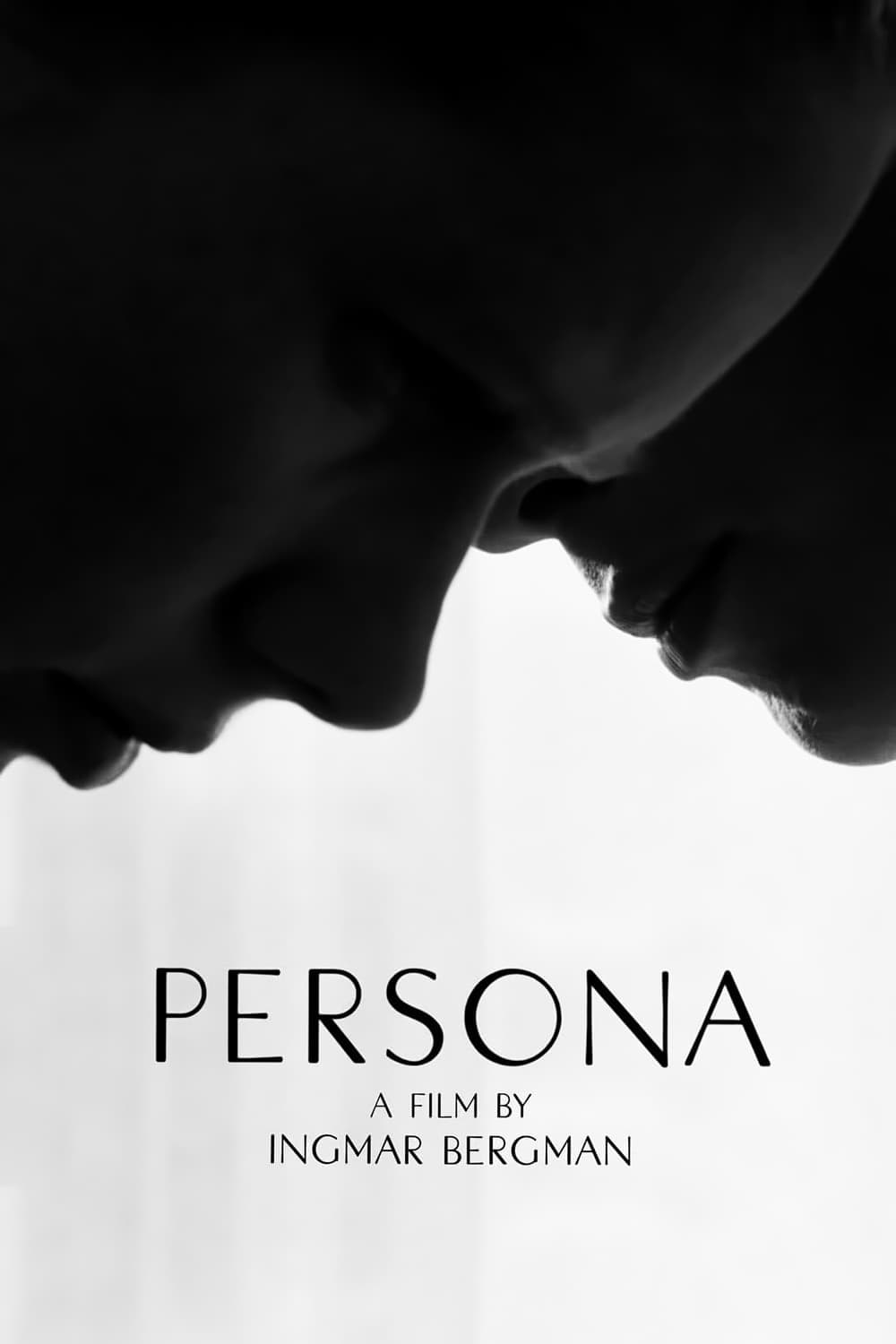
Persona
1966 · Directed by Ingmar Bergman
Original language: Swedish
- drama
The story
A young nurse, Alma, is put in charge of Elisabeth Vogler: an actress who is seemingly healthy in all respects, but will not talk. As they spend time together, Alma speaks to Elisabeth constantly, never receiving any answer.
What it’s like
Stark black-and-white close-ups on two faces, held for long stretches in a bare summer house by the sea, with the light flat and bleached against white walls and the Baltic glare pressing in from the windows. Bergman's camera is patient and often static, cutting only when it must, and the film's most striking imagery is a sequence of fractured, overexposed frames that feel like a projector jamming in the middle of a thought. The sound is sparse: waves, a gull, the scrape of a chair, and long passages of silence that make every spoken word land heavily. The vibe is cool, austere and unsettling, a quiet dread that builds through intimacy rather than action, with the eerie pull of a dream you cannot wake from. It suits a late night alone, a deliberate and attentive viewing rather than background, or a film-club evening where the discussion afterward matters. Intensity is low in violence and gore, with one brief disturbing image and a self-harm scare, but the psychological strain is intense and sustained. Best for viewers who want slow, cerebral cinema about identity, silence and the boundaries between two women, and who can sit with ambiguity.
More films like Persona
Closest in mood, pacing and theme. Tell us why you loved Personaand we’ll explain which ones fit you.