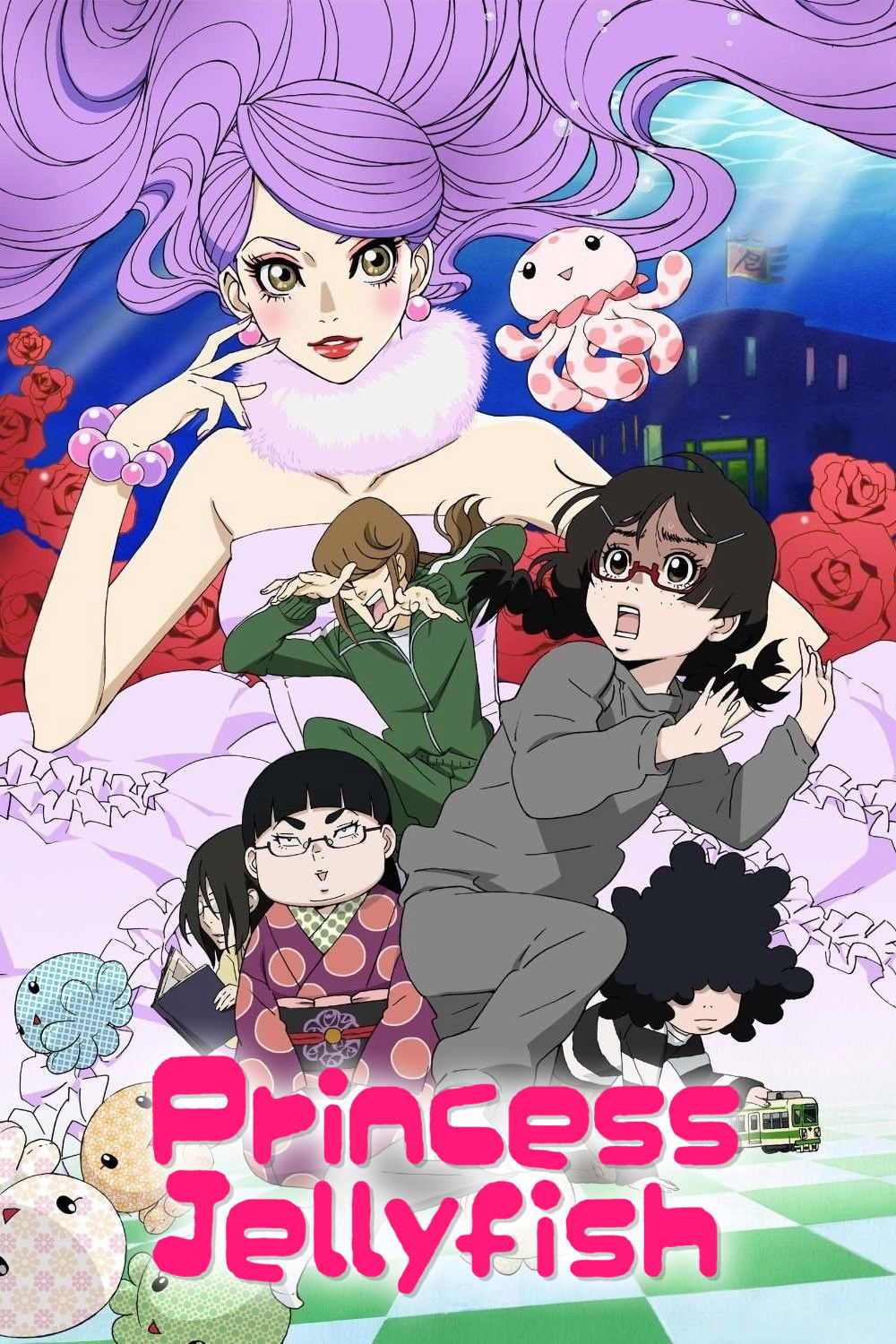
Princess Jellyfish
2010
Original language: Japanese
- animation
- comedy
The story
Amamizukan is an apartment complex where no boys are allowed. Tsukimi, a girl who adores jellyfish, lives there happily with her friends who all have nerdy obsessions of their own. Their peaceful lives gradually start to change when a beautiful woman helps Tsukimi out of a pinch. She stays overnight at the apartments—but it turns out "she" is really a "he".
What it’s like
Bright, cluttered, lovingly detailed Tokyo interiors: a shabby all-female apartment building stuffed with figurines, manga stacks, glowing monitors and jellyfish tanks, drawn in saturated, clean-edged anime colour with soft pastel gradients for dreamy moments. The camera stays close and playful, with quick cuts, comic zooms and reaction faces that snap into deadpan stillness, and the score is bouncy, orchestral and whimsical, dropping into tender piano when characters open up. The vibe is warm, goofy and gently sincere, the feel of a bright weekend afternoon or a cheerful comfort rewatch while cooking or winding down after a long week. Pacing is brisk and episodic, full of sight gags and running jokes, and the emotional register swings between slapstick and quiet sweetness as its women grow more confident and comfortable with themselves and with one another, and a lonely, wounded young man slowly learns to be seen. Comedy is the main engine, with some crude or awkward humour about gender and crossdressing, mild embarrassment, and occasional bursts of cartoonish shouting; there is no real violence, gore or sexual content, and the danger is social rather than physical. It suits viewers who love anime community comedy, quirky found-family stories and gentle, character-led warmth.
More TV shows like Princess Jellyfish
Closest in mood, pacing and theme. Tell us why you loved Princess Jellyfishand we’ll explain which ones fit you.