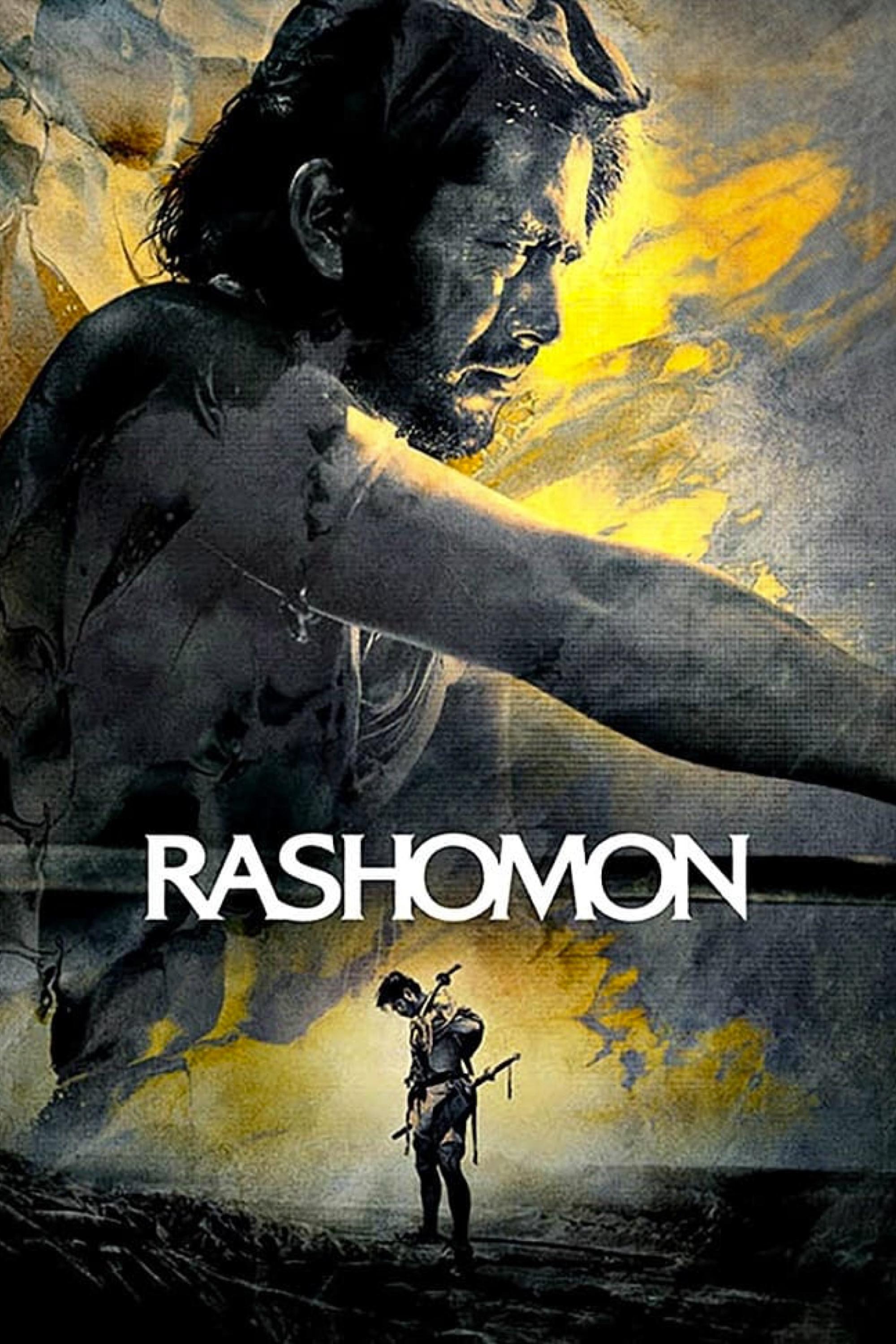
Rashomon
1950 · Directed by Akira Kurosawa
Original language: Japanese
- crime
- drama
- mystery
The story
Four people recount different versions of the story of a man's murder and the rape of his wife.
What it’s like
Rain-soaked and sepia-dark, with a ruined gate and a dense forest that seems to swallow the light, Rashomon is built around stark black-and-white contrast, sharp deep-focus compositions, and restless camera moves that circle the same clearing again and again. The sound is mostly rain, wind, distant cicadas and a jagged, percussive score that drops out to leave whole scenes in eerie quiet. Its vibe is feverish, humid and morally unsettling, the kind of film that suits a grey, rainy evening when you want to sit with ambiguity rather than be soothed. Pacing is deliberate in its framing device and then ferocious in its central recollections, with a sweaty, theatrical energy from its performers, especially Toshirō Mifune's wild, boastful bandit. Its people are liars and self-justifiers whose arcs turn on shame, pride and the limits of testimony, with a final turn toward a fragile hope in human decency. Intensity is moderate: a samurai's death, a sexual assault shown without graphic nudity, a brief but sharp sword fight, and a bloody wound, all handled with restraint rather than gore. It is for people who enjoy puzzle-box stories, classic Japanese cinema, and films that make them question what they have just seen.
More films like Rashomon
Closest in mood, pacing and theme. Tell us why you loved Rashomonand we’ll explain which ones fit you.