Ikiru
1952 · Directed by Akira Kurosawa
Original language: Japanese
- drama
The story
Kanji Watanabe is a middle-aged man who has worked in the same monotonous bureaucratic position for decades. Learning he has cancer, he starts to look for the meaning of his life.
What it’s like
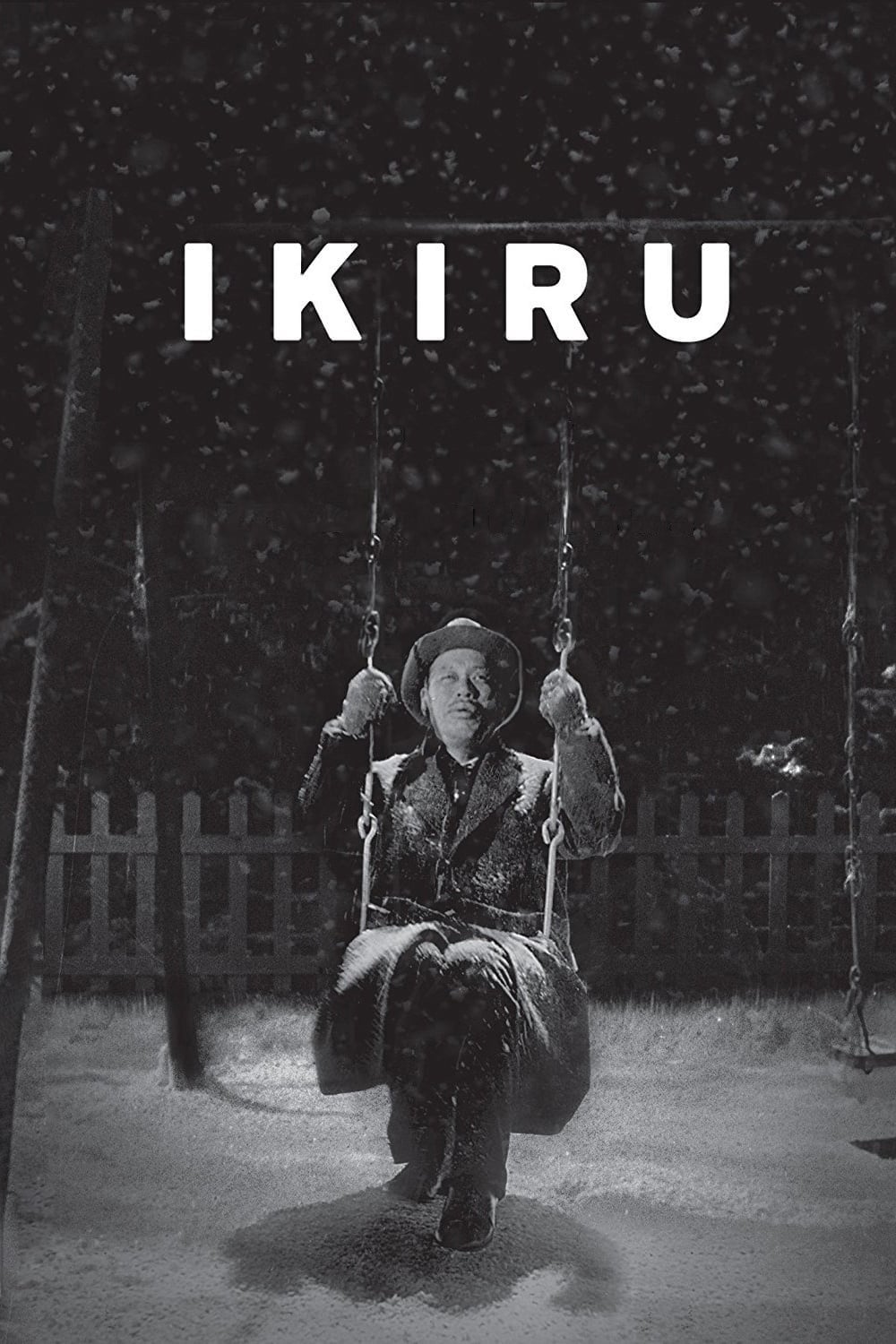
Black-and-white widescreen compositions with deep focus, where the frame is packed with desks, ledgers and stacked paperwork in flat overhead light, then falls quiet for slow, unhurried shots of rain on a bleak Tokyo lot or a child's swing in an empty park. Kurosawa's camera stays mostly still and lets scenes play out in long takes, and the sound is sparse: clerks' typewriters and chatter giving way to a wistful, hushed score and long stretches of rain and wind. The vibe is melancholy and reflective, with a dry, bittersweet humour in the office scenes and a gentle sadness that deepens as the story moves through its second half, a stretch of nightlife and flashbacks that feels like a slow exhale. Its pacing is deliberate, and the emotional arc follows a worn-down bureaucrat who, facing death, slowly finds a sense of purpose and reaches out to the people around him. Intensity is low: there is no violence, and the sadness comes from illness and grief rather than graphic depiction, though the mood can be heavy and the subject matter is mortality throughout. It suits a rainy Sunday or a quiet evening alone, and it is for viewers who want contemplative, humane drama in which small acts of kindness carry real weight.
More films like Ikiru
Closest in mood, pacing and theme. Tell us why you loved Ikiruand we’ll explain which ones fit you.