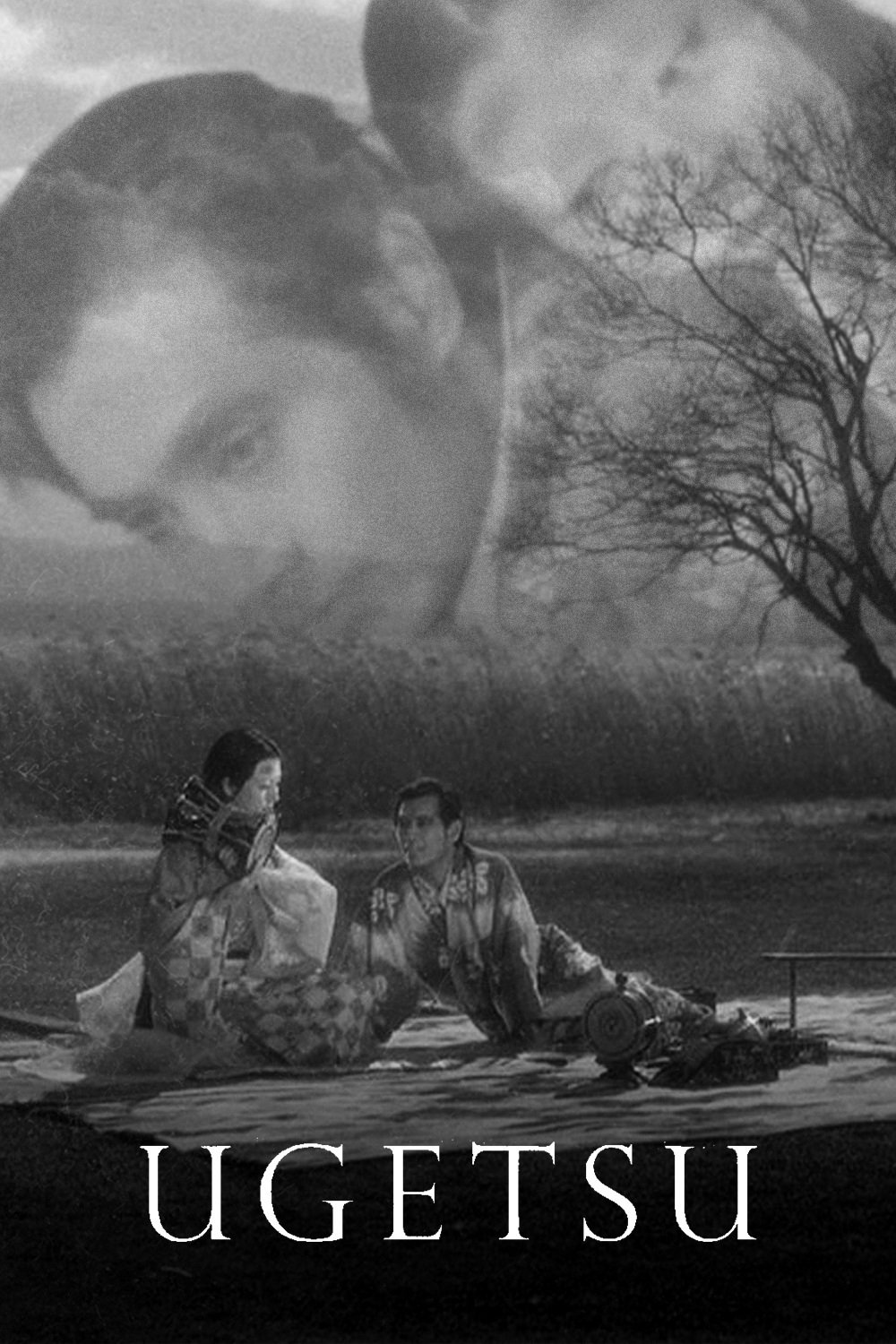
Ugetsu
1953 · Directed by Kenji Mizoguchi
Original language: Japanese
- fantasy
- drama
- mystery
The story
In 16th century Japan, peasants Genjuro and Tobei sell their earthenware pots to a group of soldiers in a nearby village, in defiance of a local sage's warning against seeking to profit from warfare. Genjuro's pursuit of both riches and the mysterious Lady Wakasa, as well as Tobei's desire to become a samurai, run the risk of destroying both themselves and their wives, Miyagi and Ohama.
What it’s like
Black-and-white widescreen compositions of misty rice paddies, reed-thatched villages and lake water under overcast grey skies, with long, slow tracking shots that let figures drift through fog and smoke. The lighting is soft and diffuse, with candlelit interiors sinking into deep shadow, and the ghostly scenes take on a dreamlike glow. The sound is restrained: wind across the marsh, distant drums of war, and a delicate, sparse score that swells only at moments of dread. Its vibe is elegiac and haunted, a slow-burning melancholy with the unsettling pull of folklore. Pacing is unhurried and contemplative, the emotional register grave and tender, and the central arcs follow ordinary people whose ambition and desire lead them toward loss and quiet remorse. Violence occurs in brief, sudden bursts of wartime brutality, including a harrowing sequence of soldiers attacking a village, but it is mostly restrained, with the horror carried by atmosphere and sorrow rather than gore. Some sexual content and mild nudity appear in a few intimate scenes. For viewers who love classic Japanese cinema, slow-cinema contemplation, and ghost stories that linger on grief and moral consequence.
More films like Ugetsu
Closest in mood, pacing and theme. Tell us why you loved Ugetsuand we’ll explain which ones fit you.